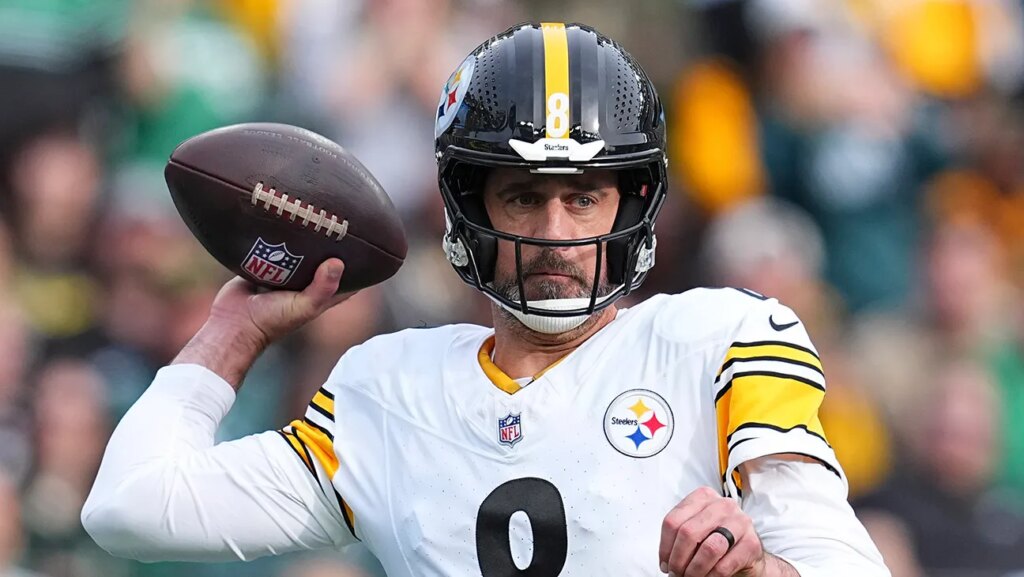
In a dramatic turn of events, Aaron Rodgers found himself leaving Pittsburgh not just as a quarterback, but as a man igniting a firestorm of controversy. Shortly after facing the media spotlight on ESPN’s The Pat McAfee Show, the Pittsburgh Steelers made the shocking decision to cut ties with the four-time NFL Most Valuable Player.
Rodgers Benched, Then Released
The Steelers’ decision to bench the 42-year-old future Hall of Famer in favor of backup Mason Rudolph came just hours before their Friday matchup against the Denver Broncos. This dramatic shift marked the beginning of a bewildering 18-hour saga that led to Rodgers’ release from the team.
Responding to the unexpected benching, Rodgers took an excused absence from the club. However, instead of lying low, he seized the opportunity to appear on McAfee’s show, where he launched a blistering critique of Steelers head coach Mike McCarthy—his former coach during a successful era in Green Bay.
Criticism of McCarthy
During his appearance, Rodgers candidly discussed his frustrations with McCarthy’s leadership style, questioning the coach’s mental acuity. He recounted an incident from the previous week’s quarterback meeting where McCarthy reportedly arrived late and dozed off shortly after sitting down, only to wake up and leave as though nothing happened. Additionally, Rodgers highlighted McCarthy’s absence from crucial meetings leading up to game day.
“The product wasn’t great” on the field, Rodgers stressed, referencing the lackluster performance during their game. He emphasized his position as a seasoned player and felt it necessary to speak up about issues that could hinder the team’s success, rather than placing the burden on younger, less established players. “What are you going to do to me?” he stated, revealing his nonchalant attitude about the repercussions, given his illustrious career.
Response and Fallout
The fallout from Rodgers’ comments reverberated throughout the Steelers locker room. While players like tight end Pat Freiermuth and wide receiver Marquez Valdes-Scantling acknowledged frustrations regarding team performance, they refrained from directly addressing the contentious accusations made by Rodgers.
Pittsburgh’s decision to turn to Rudolph, who previously salvaged the team’s season, adds layers of intrigue to a franchise that is attempting to break free from a two-game slump. The Steelers, currently holding a 6-4 record, have crucial games ahead against formidable opponents including the Denver Broncos and Houston Texans.
A Hall of Fame Career in Question
Rodgers, who has already announced this season as his last, now faces uncertainty about his future. The abrupt end to his tenure in Pittsburgh seems all the more perplexing when viewed against the backdrop of the NFL’s history of sitting legendary quarterbacks midseason. Notably, cases like Johnny Unitas and Peyton Manning highlight the unique nature of Rodgers’ situation.
Despite moments of brilliance early in the season, including several standout performances, Rodgers has struggled to maintain consistent impact in recent games, showcasing a lack of cohesion with the offensive line and receiving corps. His average of just 0.5 air yards per attempt in a recent game against Philadelphia signifies a worrying trend.
The Future for Rodgers
As the Steelers attempt to navigate their playoff ambitions, the question looms: What’s next for Aaron Rodgers? His journey—one marked by individual triumphs and team struggles—now faces an unexpected detour. Though his desire to end his career with a championship remains, his recent experiences have left fans and the organization contemplating a once-promising partnership that may now culminate in an unconventional off-ramp for both player and team.
AP Pro Football Writer Rob Maaddi and AP Sports Writer Aaron Beard contributed to this story.