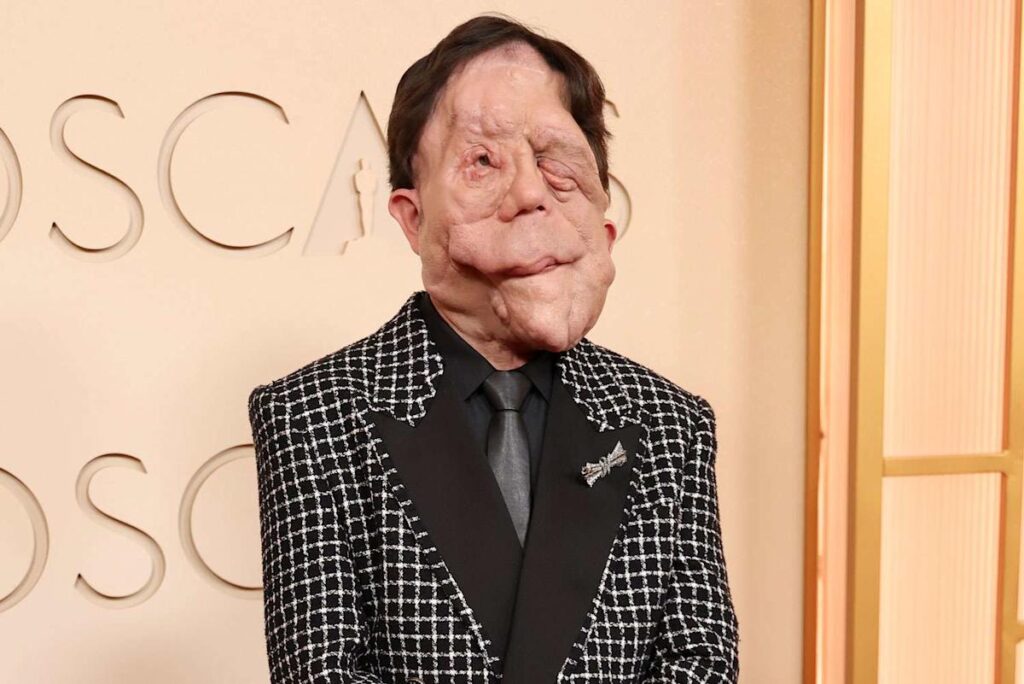
Adam Pearson Claps Back at Comedian Who Made Fun of His Appearance: ‘I’d Like to Not Have My Disability Mocked’
British actor Adam Pearson is making headlines as he fiercely responds to a comedian who targeted his appearance in a recent online post. In a moment that sheds light on the ongoing issue of ableism, Pearson, who lives with neurofibromatosis, emphasized the need for respect and dignity for individuals with disabilities. His direct retort serves not only as a personal defense but also as a broader commentary on the harmful nature of ableist jokes.
Responding to Mockery
On March 19, the star of *A Different Man* took to the social media platform X to defend himself after a comedian mocked his looks with a derogatory caption. The critic posted a photo of Pearson from the Oscars red carpet, stating, “Me and the boys after taking Chinese Peptides for 5 years.” In a witty and powerful comeback, Pearson replied, “You can tell a lot about a person’s character by looking at who they’re willing to punch down towards – even in the name of comedy.” His response highlighted his belief that mocking someone’s appearance, especially based on a disability, reflects poorly on the person doing the mocking.
The Importance of Respect
Many social media users rallied around Pearson, but some suggested he should “learn how to take a joke.” Undeterred, he stated, “I took it and I responded. Freedom of Speech works both ways snowflake.” This exchange encapsulates a larger debate about the boundaries of humor and respect in discussions surrounding disabilities. Pearson further emphasized his point, saying, “Ideally I’d like to not have my disability mocked but I guess that’s too much to ask, eh?”
Highlighting the Impact of Neurofibromatosis
Adam Pearson has been open about his struggle with neurofibromatosis, a rare genetic condition that causes painful tumors and can significantly alter one’s appearance. Affecting approximately 100,000 individuals in the United States alone, neurofibromatosis is often misunderstood, leading to stigmatization of those who live with it. Dr. Kaleb Yohay, head of NYU Langone’s Comprehensive Neurofibromatosis Center, has noted that awareness and understanding around this condition are crucial to fostering a more empathetic society.
A Call for Understanding
Pearson’s dialogue surrounding the mocking of his appearance shines a light on the pervasive nature of ableism in society. In his communication with his critics, he urged for the recognition of the underlying message: “You think asking for respect and dignity (i.e. not being mocked for a disability) is being treated differently? Well that’s certainly an interesting take.” This statement resonates with many who have faced similar discrimination and underscores the importance of dialogue about disabilities.
In taking a stand, Adam Pearson not only defends himself but also prompts a necessary conversation about the treatment of individuals with disabilities. His call to action is clear: respect and dignity should be afforded to everyone, regardless of their appearance or disabilities.