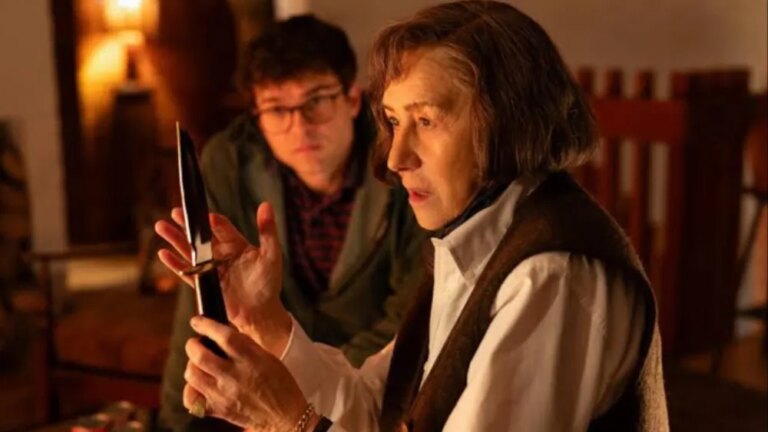
In his latest film “A Talent for Murder,” director Anton Corbijn delves into the complex life of renowned writer Patricia Highsmith. Best known for creating the chilling character Tom Ripley, Highsmith, portrayed by Helen Mirren, remains a controversial figure due to her provocative antisemitic and misanthropic remarks.
Exploring Highsmith’s Complexity
Corbijn acknowledges the challenges of accurately portraying Highsmith, stating, “By all accounts, she was much worse than what we show in the film. You don’t want her to be completely unlikable. It’s difficult when you don’t actually know the person and base everything on hearsay, but she was a very difficult woman. Also to herself,” as he told Variety.
A Unique Performance from Mirren
The director appreciates the way Mirren, now in her 80s, fully embraces the multifaceted and often unflattering aspects of Highsmith’s character. He quips, “She’s a great jerk! I think it’s healthy. It’s never too late to be a bitch. I’m referring to our Highsmith, of course. Luckily, she only killed fictional characters.”
Intriguing Character Dynamics
Set against the backdrop of a Swiss retreat, the film features Highsmith alongside a young man named Edward, played by Alden Ehrenreich. Edward attempts to persuade her to write another novel about Ripley, but their interactions reveal a toxic relationship, with Corbijn suggesting, “They’re testing how bad people can be and how far they can go. Unfortunately, it’s always further than you’d like to think.”
The Allure of Evil
Ripley’s allure lies in his charm and ability to mask his sinister nature, a trait echoed in Corbijn’s previous works like “The American Friend” and “The Talented Mr. Ripley.” The director notes, “When evil is obvious, it’s not interesting because you know it’s coming. That’s his strength, and I think that’s the strength of the film. You don’t know if you should like them or not.”
Casting Choices and Performance
Corbijn highlights Alden Ehrenreich’s versatility, stating, “I love how Alden can change in very minimal ways. He can be this nerdy guy, and then he can be a mean killer with cold eyes. We got really lucky with this cast.”
Fiction vs. Reality
While the film emphasizes that its portrayal of Highsmith is “entirely fictional,” this isn’t Corbijn’s first attempt at depicting real-life figures. His breakthrough film “Control,” about Joy Division’s Ian Curtis, was informed by his personal connection to the subject. Laughing, he recalls, “I knew the guy, so I think it’s a very truthful film.”
Concerns About the Future of Cinema
As a prominent figure in both photography and music video directing, Corbijn expresses concern over the rise of artificial intelligence’s influence in cinema, stating, “I get very depressed thinking about A.I. replacing so much in cinema, but it’s the same with music.” He worries about the broader implications, adding, “We all prefer comfort over substance, and that will be our downfall. Needless to say, there’s no A.I. in my film.”
Ripley’s Enduring Relevance
Corbijn’s reflections lead him to a sobering thought: “I’m really worried about the immediate future because things are changing way too fast. I think we will respond badly to it. And too late.” His apprehension parallels the continuing popularity of Ripley, who seems to resurface when societal conditions align with his dark worldview. “It’s as if he returns when the world aligns with his thinking, which is terrible. Maybe people are more accepting of murder today?”