As the midterm elections approach, Ava DuVernay’s impactful documentary, “14th,” makes its debut at a crucial moment in American history. In contrast to other trending films that delve into the dangers of AI and the lives of tech billionaires, DuVernay’s latest work shines a light on the 14th Amendment and its essential contribution to American democracy.
Exploring the 14th Amendment’s Legacy
“14th” examines the constitutional amendment that guarantees birthright citizenship, due process, and equal protection under the law. The film argues that these fundamental principles—and the amendment’s ban on those who engage in insurrection from holding office— face unprecedented challenges in today’s political climate.
Voices of Authority
Featuring interviews with notable figures, including Rep. Alexandria Ocasio-Cortez (D-N.Y.), Rep. Anna Paulina Luna (R-Fla.), and legal experts like Sherrilyn Ifill and Robert Chang, as well as political activists such as Stacey Abrams and commentators like Donald T. Critchlow and Hasan Piker, DuVernay unearths the historical context and current relevance of the amendment.
Premiere Details
The Netflix documentary is scheduled to close the New York Film Festival and will be available for streaming starting December 9.
The Inspiration Behind “14th”
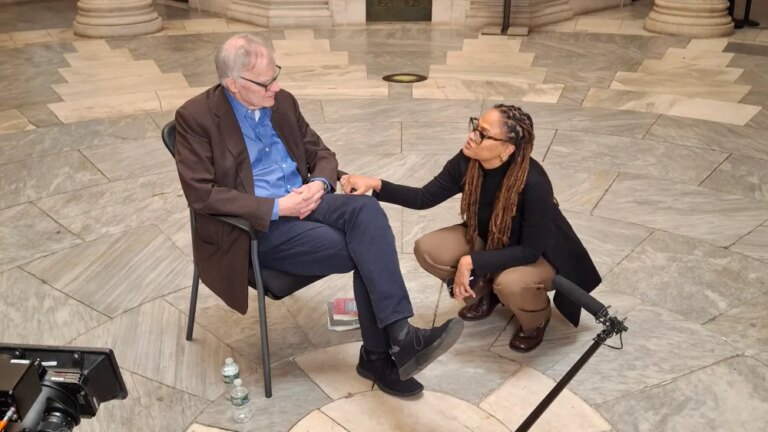
In an interview with Variety, DuVernay and editor-producer Spencer Averick discussed what prompted their exploration of the 14th Amendment. “We’ve gone through a decade of Trump,” remarked DuVernay, noting the significant uptick in attacks on democracy over that time. “I was particularly interested in the evolving conversations about who gets to be labeled an American.”
A compelling point made by commentator Van Lathan Jr. resonated deeply with DuVernay: if being born in America or being naturalized does not necessarily make you American, what does? DuVernay emphasized, “We’re in the midst of something very sinister—something very dangerous—and we all need to be aware of it.”
The Evolution of the Project
Averick recalled how their discussions about Trump’s rhetoric regarding birthright citizenship, which began even before he was elected, fueled the film’s development. “It started to become a concrete threat,” he stated, noting that what began as a vague concern grew into a focused exploration of the 14th Amendment.
Narrative Threads and Cultural Context
The narrative thread of the “Lost Cause” emerged as a critical historical backdrop for the film. Averick explained that after the Civil War, the 14th Amendment was met with resistance—culturally, violently, and legislatively. “The cultural war against the 14th Amendment and Reconstruction was hidden under the guise of the ‘Lost Cause,’” he added. DuVernay equated this historical backlash with contemporary political movements, noting that today’s manifestations—like MAGA—reflect a similar hierarchy that contradicts the values of the 14th Amendment.
Curating Diverse Perspectives
The documentary draws on a diverse group of voices to illuminate various aspects of the 14th Amendment’s history and impact. “We wanted individuals who could convey information in an accessible and engaging way,” DuVernay said. The editorial approach, as highlighted by Averick, allowed the filmmakers to present multiple perspectives while maintaining a dynamic narrative flow throughout the film.
Challenges in Securing Participation
Addressing the inclusion of Republican voices, DuVernay revealed the extensive outreach effort they undertook, making over 300 requests to Republican legislators and officials. “The only ones who accepted the invitation were Sen. Jeff Flake and Congresswoman Anna Paulina Luna, along with conservative author Donald Critchlow,” she noted, emphasizing the importance of presenting a balanced dialogue.
A Call to Action
Averick expressed the hope that viewers would reflect on the Reconstruction era and see parallels in today’s political landscape. “We need to recognize ourselves as founders and framers of our own time,” he stressed. DuVernay added that while voting is crucial, it must be accompanied by active civic engagement: “It’s not just about electing leaders; we need to hold them accountable and empower our communities.”
Maintaining Relevance Amid Change
As the documentary wraps up, the filmmakers faced the challenge of capturing the ongoing nature of American politics. DuVernay concluded, “We ran out of time,” while Averick noted that the film had to adapt to the frequent attacks on various aspects of the 14th Amendment, ultimately creating a cohesive and powerful narrative to inspire action.
This interview has been edited and condensed for length and clarity.