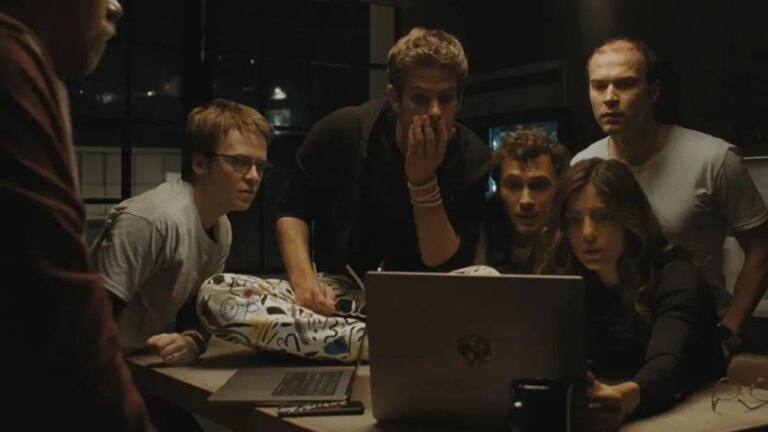
In a surprising turn of events, Luca Guadagnino’s latest film, “Artificial,” has garnered critical acclaim following a tumultuous journey to the screen. The U.K. premiere at the London Film Festival on Sunday marked a triumphant moment for a film that initially faced significant challenges, including its removal from Amazon MGM’s summer release slate and a subsequent negative whisper campaign.
Triumphant Debut and Critical Acclaim
“Artificial” made its world premiere just a week prior at the New York Film Festival, receiving enthusiastic praise from both the audience and critics. Director Luca Guadagnino, accompanied by lead actors Andrew Garfield and Yura Borisov, was met with thunderous applause at London’s Royal Festival Hall. This response stands in stark contrast to the skepticism surrounding the film’s viability as a theatrical release after Amazon MGM’s decision to drop it.
A Twist in Fortune
“So this is a dawn-of-a-new-world story, as well as a backstabbing corporate business story, and also a horror movie, in which AI emerges from the lab as a sinister serpent,” wrote Owen Gleiberman, chief critic for Variety, calling the film a “brilliant but playful docudrama, meticulously true to history.” With a remarkable 96% Fresh rating on Rotten Tomatoes, “Artificial” has achieved Guadagnino’s highest score across 11 feature films, positioning Garfield as a strong contender for best supporting actor due to his portrayal of a diabolical villain.
The Amazon Controversy
The mounting acclaim represents a significant turnaround for Guadagnino after the drama with Amazon, where it was considered unusual for a tech-owned studio to ax a project it had nurtured. Neon stepped in to rescue “Artificial” with a global rights deal, following Amazon’s statement that the film would be better served under a different studio. This decision came mere months after a substantial partnership between Amazon and Sam Altman’s OpenAI, including a monumental $50 billion investment.
Despite Amazon’s rationale to abandon the film, reports suggest that “Artificial” has received exceptional early audience reactions. Film executives from competing studios are questioning Amazon’s decision, with one remarking that the strong response indicates a disconnect between the film’s quality and Amazon’s investment conflicts in AI.
Industry Reactions
Following the film’s buzz, skepticism about its theatrical merits was noted. New York magazine previously cited sources claiming that “Artificial” lacked the qualities deemed necessary for theatrical success. However, early critical praise positions it as a worthy successor to films like David Fincher’s “The Social Network.” The unexpected acclaim has raised questions about Amazon’s judgment regarding the film.
Notably, Amazon’s struggles with AI-adjacent projects extend beyond “Artificial.” Actor Nicolas Cage recently drew attention at the New York Comic Con by refusing to allow AI usage of his likeness in a now-canceled project. Cage articulated his position clearly: “I am not an AI-friendly actor. I’m not a member of their club. I didn’t sign the waiver,” hinting at broader tensions in the industry surrounding AI and talent rights.
The Future of AI in Filmmaking
This discontent and apprehension about AI’s role in filmmaking are likely to persist. A source from an Amazon MGM series indicated that AI training is becoming a standard component of production processes, describing corporate meetings that promote AI tools as potentially threatening to creative jobs. This shift raises concerns about the implications of such technologies within the industry.
As major studios pursue cost efficiencies through AI, the question remains whether they can replicate the cultural impact and excitement generated by films like “Artificial.” This evolving narrative underscores the complexities of balancing innovation with the artistic integrity and labor rights of those in the creative industry.