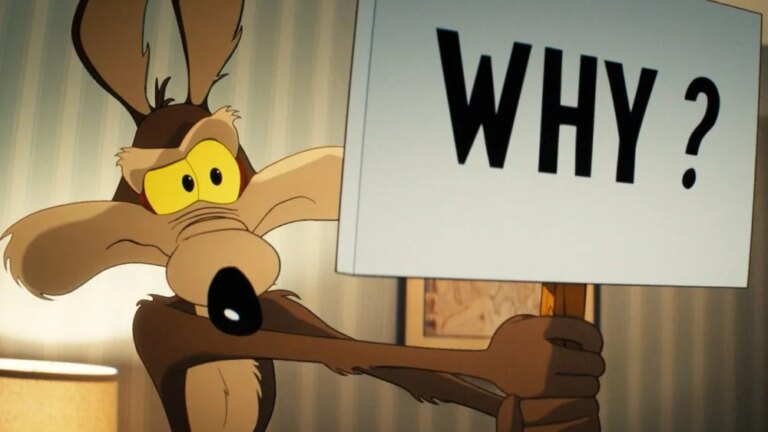
Three years after being shelved by Warner Bros. as part of a tax write-off, “Coyote vs. Acme” has emerged as an unexpected success story. Rescued by indie distributor Ketchup Entertainment, the Looney Tunes comedy has grossed over $100 million globally. This raises a significant question: Was Warner Bros. Discovery chief David Zaslav wrong to remove it from theaters?
Assessing the Financials
The answer to this question may hinge on whose financial perspective is examined. Analysts point out that “Coyote vs. Acme” has proven to be a remarkable win for Ketchup Entertainment, which purchased distribution rights for $50 million and pre-sold foreign territories to help recover costs. In contrast, the film’s production cost reached $70 million, and given that theater owners retain half of box-office sales, Warner Bros. might not have celebrated similar grosses had they released it. The studio ultimately opted for a $30 million tax write-down instead.
The Impact of Marketing
There is a strong argument that Warner Bros. could have bolstered marketing efforts, enhancing the film’s global ticket sales. Alternatively, some speculate that the audience rallied behind “Coyote vs. Acme” as a statement against the studio’s decision. In comparison, another Ketchup-distributed Looney Tunes installment, “The Day the Earth Blew Up: A Looney Tunes Movie,” performed dramatically worse, managing only $15.4 million globally.
Fan Reactions and Reviews
According to Shawn Robbins, founder of Box Office Theory and director of movie analytics at Fandango, “It’s easy to opine on a decision after we’ve seen the effects. The movie did well partly because of rallying from fans. But it turned out to be a good movie.” Launched in late August, “Coyote vs. Acme” opened with a solid $15.9 million in its initial domestic run, which has since reached $59.8 million, along with $45 million abroad. This success underscores the enduring appeal of PG-rated films that emphasize familiar brands, a critical asset in a market where families seek new content.
Warner Bros.’ Current Challenges
The film’s success starkly contrasts with Warner Bros.’ troubling 2026 box office performance, characterized by a series of financial missteps, including losses from Tom Cruise‘s “Digger,” Maggie Gyllenhaal‘s “The Bride!,” and DC’s “Supergirl.” Analyst David A. Gross of FranchiseRe noted, “There was legacy value in that IP, and the box office grosses of ‘Coyote vs. Acme’ reflect it. All-audience films are extremely valuable and among the biggest earners at the box office.” He added that proper marketing could have maximized its performance.
The Fallout of the Decision
The extensive negative publicity surrounding Zaslav’s choice to shelve a completed film—reportedly well-received during test screenings—has not ingratiated him with many in the film industry. His strategy followed a controversial approach taken by his predecessor, Jason Kilar, whose simultaneous theater and HBO Max releases in 2021 alienated creatives. Sources within the studio suggest that while there was internal dissent regarding Zaslav’s decision to discard the film, it ultimately rested on financial calculations.
Understanding the Value of IP
At the time of its shelving, “Coyote vs. Acme” was among the third wave of films cut by Zaslav in a post-pandemic cost-reduction initiative, following similar actions taken against “Batgirl” and “Scoob! Holiday Haunt,” both of which were also approved under Kilar’s leadership. Zaslav explained then that he sought to refocus the studio on theatrical releases and deemed “Coyote vs. Acme” inconsistent with his vision. However, the question remains whether he fully grasped the asset value locked in Warner Bros.’ storied catalog. Recognizing the undeniable draw of established franchises, industry observers assert that studios invest heavily in recognizable IP to secure profits that facilitate riskier projects.
The Ongoing Debate
Robbins remarked, “We see so many remakes and sequels because they make money.” The unexpected success of “Coyote vs. Acme” raises important discussions about decisions made in the realm of film production and distribution, leading many to question the wisdom behind shuttering potential box-office hits—especially those anchored in familiar intellectual properties. As the industry continues to evolve, the controversy surrounding Zaslav’s actions may linger, illustrating the complexities of balancing creative vision with financial realities.