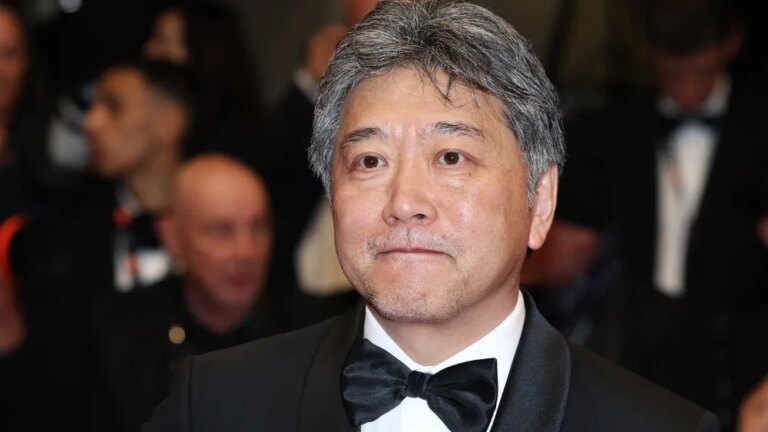
Eddie Redmayne’s highly anticipated collaboration with renowned Japanese director Kore-eda Hirokazu remains in its early stages, as revealed during a recent press conference at the Busan International Film Festival. Kore-eda, while discussing his new adaptation of the manga “Look Back,” shared that the film is currently at the screenplay stage.
Script Development and Future Plans
“Right now, I am writing the script,” Kore-eda explained about the upcoming Searchlight Pictures project. He refrained from divulging specific plot details but expressed confidence in the film’s preparation, stating, “Please look forward to it.” Although no title has been announced, the director anticipates making a formal reveal next year, with hopes of showcasing the film at the Busan festival in the future.
A Longstanding Relationship with Busan
Kore-eda’s connection to the Busan festival is profound, having been invited back multiple times since his debut. The festival even honored him with a musical piece named after him during the opening ceremony, highlighting the emotional significance this city and its festival hold for him. Joining him at the press conference were the cast members from “Look Back,” including Deguchi Natsuki, Makita Aju, Mori Nana, and Ishikawa Ruka.
Creative Inspiration from Manga
Kore-eda stumbled upon the manga in a bookstore rather than following its serialized release. “When I read it, I felt a shock like an impact,” he recounted, noting the story’s exploration of the motivations behind storytelling—an echo of his own artistic journey in film-making. He emphasized a focus on the actors’ interactions and the natural beauty of the town during different seasons rather than providing detailed, scene-by-scene directives. “The cast understood that very well,” he noted, praising their ability to embody their characters as individuals truly living in that setting.
Filming Techniques and Aesthetic Choices
From the beginning of the adaptation process, Kore-eda was committed to shooting in 35mm, consistent with his belief that any film worthy of being made should be shot on celluloid. “Because there is no mindset of ‘we can fix it later,’ it creates a healthy tension for the cast and crew,” he stated, asserting that this shared tension fosters a creative magnetic field during production.
Animation as a Storytelling Device
The film includes a unique rotoscoped animation sequence inspired by a pivotal line in the manga. After winning a competition, the character Fujino expresses her desire to see her manga animated, leading to a temporary rift between the two central characters. Kore-eda explained how the animation serves as a representation of a future that the characters never get to experience together. “Rotoscoping sits halfway between live-action and drawn animation,” he elaborated, finding this technique a fitting way to express the story’s emotional depth.
Emotional Connections and First-Time Experiences
The film opens and closes with shots of Deguchi Natsuki from behind, culminating in a uniquely emotional directive from Kore-eda: “Show Kyoko through your back.” Reflecting on this moment, Deguchi shared how the experience felt surreal, as she acted alone after an extended period with her co-star. “It felt like she was there, but not there… so with my heart feeling completely empty, I did that shot,” she recounted.
Makita, in attendance at Busan for the first time, remarked on the vibrant atmosphere of the festival. “There was a huge crowd, so I was nervous, but seeing everyone wave their hands made it so much fun,” shared Mori, who previously walked the red carpet at the Venice Film Festival but felt a distinct difference in the energy at Busan.