In a significant legal development, a judge has dismissed charges against a man arrested for creating rainbow chalk art near the Pulse nightclub in Orlando, Florida. This case has sparked widespread discussion amid the ongoing debates over LGBTQ rights and public art. The arrest, which many viewed as part of a broader cultural clash, drew attention to the symbolism of the artwork, aimed at honoring the victims of the tragic 2016 mass shooting. The judge’s decision highlights the tension between creative expression and regulatory frameworks.
Arrest and Dismissal
The Florida Highway Patrol arrested Sebastian Suarez during a protest near the Pulse nightclub. Suarez, who used chalk to color the bottom of his shoe, left footprints on a crosswalk meant to memorialize the 2016 tragedy. He was initially charged with defacing a traffic device, but the judge found no probable cause, leading to his release from jail. Suarez expressed disbelief over the incident, saying, “To come here and do something like this, and to be threatened with something so extreme as a felony charge for protesting and showing love to your fellow human, it’s just insane in my opinion.” Visiting from Georgia with his fiancée, Suarez had joined others to support the chalk art protest.
Background of the Memorial
The Pulse nightclub became an indelible part of history in 2016 when Omar Mateen killed 49 people and injured 53 others, marking one of the deadliest mass shootings in the United States at the time. In memoriam of the victims, a rainbow crosswalk was established in 2017 at the site. However, the memorial has become a focal point in the broader cultural and political battles involving LGBTQ rights.
Cultural and Political Tensions
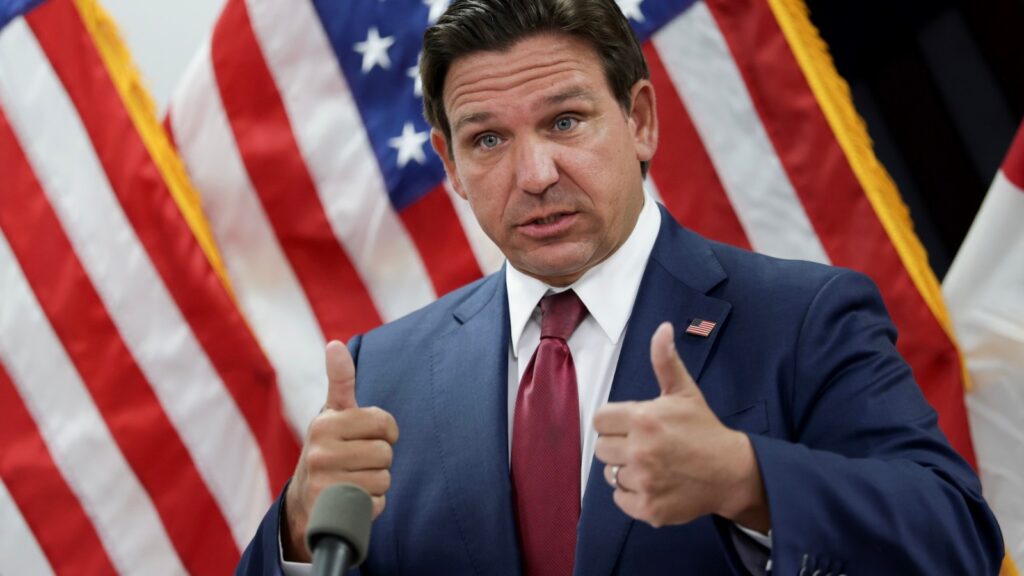
The art has been at the center of political scrutiny, particularly from those aligned with former President Donald Trump and Florida Governor Ron DeSantis. Trump’s administration had previously urged the removal of “distracting” road art, and recently, the Florida Department of Transportation, under DeSantis, painted over the rainbow design. This action followed new guidelines prohibiting non-standard road markings. DeSantis maintained, “We will not allow our state roads to be commandeered for political purposes.” In response, protesters, including Suarez, have repeatedly restored the rainbow with chalk, sparking continued confrontations with authorities.
Community Response and Legal Perspective
Blake Simons, Suarez’s attorney, emphasized the political nature of the arrest, stating that it was part of a larger fight against the LGBTQ community. Simons highlighted the non-destructive nature of the protest, pointing out that the use of water-soluble chalk posed no damage to public property. “They’re not injuring or damaging property using water-soluble chalk,” Simons noted, underscoring the peaceful intent behind the demonstration.
This legal decision represents an important moment in the ongoing conversation about artistic freedom, LGBTQ rights, and the political landscape in Florida. As the cultural debate continues, the case of the rainbow chalk art near the Pulse nightclub serves as a poignant symbol of resilience and expression amidst adversity.