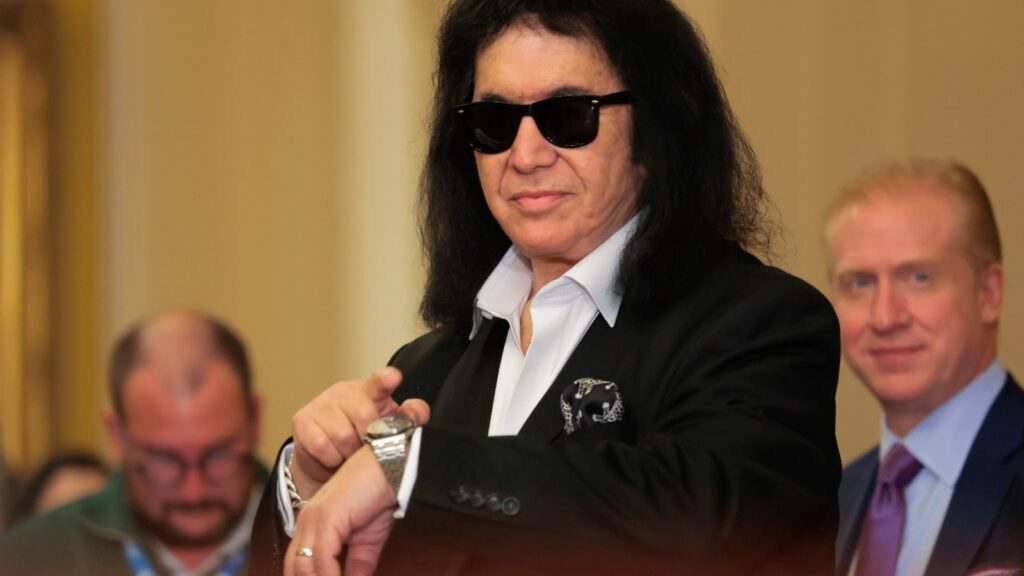
In a direct appeal to Congress, rock legend Gene Simmons has ignited a heated debate over fair compensation for artists, arguing that they are treated “worse than slaves” because radio stations do not pay them for the airplay of their music. Simmons’ comments highlight a critical gap in the American music industry, where currently, only songwriters receive royalties from radio broadcasts.
Gene Simmons took the spotlight at a recent Senate subcommittee hearing, urging lawmakers to pass the American Music Fairness Act. This proposed legislation aims to ensure that both performers and songwriters are paid when their music is played on the radio. At present, artists, including prominent figures like Frank Sinatra and Elvis Presley, have historically received nothing from the millions of times their songs have aired on U.S. radio.
The Call for Legislative Change
In his passionate testimony, Simmons illustrated the issue by recounting a conversation with fellow musician George Strait, who was unaware he had never been paid for radio plays of his hit, “Amarillo by Morning.” Simmons emphasized the injustice, stating, “If you are against this bill, you are un-American,” urging that it’s imperative to change a system where artists get no financial recognition.
A Global Comparison
The current U.S. system stands out globally. Unlike countries such as Russia and China, where both songwriters and performers are compensated for radio airplay, the U.S. approach is more aligned with nations like Cuba and North Korea. This discrepancy has led to some countries withholding royalties from American artists due to the lack of reciprocity.
The Panel’s Perspectives
Simmons was joined by Michael Huppe, the CEO of SoundExchange, who also voiced his support for the bill. However, Henry Hinton, a broadcaster and radio station owner, expressed concerns, declaring that these royalties could financially strain local radio stations, potentially affecting their operational choices.
In response, Simmons dismissed these apprehensions, suggesting that the costs were minimal in the broader context of ensuring artists are justly compensated. “What’s your problem?” he rhetorically asked Hinton, underscoring his stance that the rights of artists should come first.
Support from the Artist Community
The American Music Fairness Act has garnered widespread support from several artists, including David Byrne and Boyz II Men. Iconic figures in the music industry continue to press Congress for action, hoping to reshape the landscape of artist compensation and rectify longstanding disparities.
Simmons’ plea echoes a growing sentiment for change, pushing the dialogue forward on an issue that affects countless musicians and their ability to earn a fair living from their art.