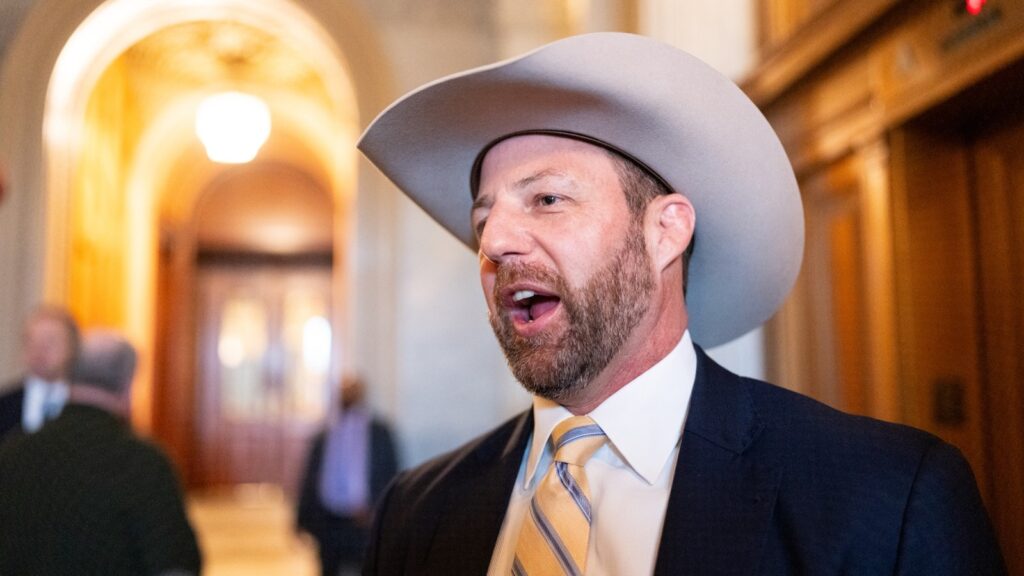
Senator Markwayne Mullin recently stirred controversy by mistakenly attributing responsibility for Jeffrey Epstein’s 2008 plea deal to former President Barack Obama, despite the fact that George W. Bush was in office at the time. This erroneous claim came during an interview on CNN’s State of the Union, where host Jake Tapper corrected the senator’s historical inaccuracies regarding the plea deal timeline.
The Interview Exchange
During the discussion, Tapper and Mullin debated the attorney general’s ability to release documents related to Epstein’s investigation. While Mullin argued that only judges could make such documents public, Tapper highlighted that additional information was promised by Attorney General Pam Bondi. The conversation took a surprising turn when Mullin incorrectly stated that Epstein’s deal in Florida took place in 2009 under President Obama.
Clarifying the Timeline
The plea deal actually occurred in 2008, with then-U.S. Attorney Alex Acosta negotiating a non-prosecution agreement. Acosta, a Bush appointee, later served as President Trump’s secretary of labor. Despite Tapper’s corrections, Mullin insisted on his version of events, incorrectly believing that Obama was in office at the time.
Correcting the Record
Official reports confirm that the agreement was orchestrated in the summer of 2008, allowing Epstein to plead guilty to charges in Florida and serve a reduced sentence. This arrangement, widely criticized as a “sweetheart deal,” resulted in Epstein serving less than 13 months with privileges such as work release. In September 2009, a judge unsealed the agreement, clearing any misconceptions about the timeline.
The Ongoing Debate
The controversy reignited discussions about the plea deal’s fairness and the systemic biases highlighted by Epstein’s case. Marie Villafana, a lead prosecutor in the investigation, later described the deal as an “injustice” shaped by deep institutional biases. This case continues to spark conversations about accountability and transparency in the justice system.