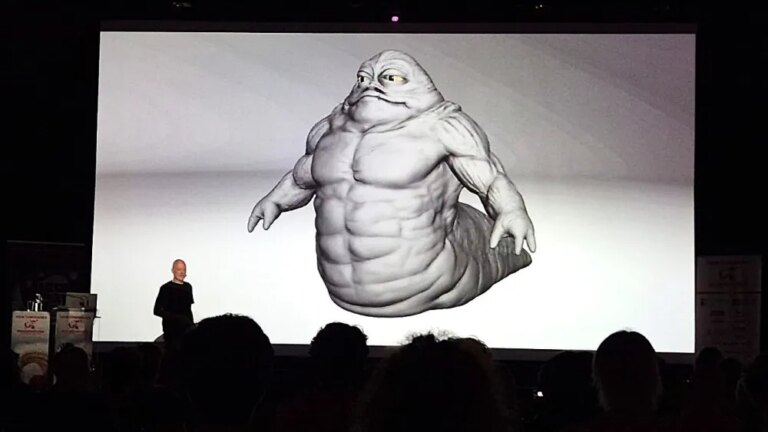
At the recent View Conference in Turin, Industrial Light & Magic’s animation supervisor Hal Hickel shared insights into the creative process behind Jon Favreau’s “The Mandalorian and Grogu.” One pivotal question that guided the team’s approach was, “What would Phil do?” This reference is to legendary stop-motion animator Phil Tippett, whose groundbreaking work in the original “Star Wars” trilogy shaped the visual language of the franchise, influencing everything from the iconic AT-AT walkers to the intricate battles between droids.
Blending Traditions in Animation
Hickel, who has spent three decades at ILM, detailed how the team seamlessly integrated digital animation with traditional filmmaking techniques, including physical sets and mechanical rigs. During the conference, Hickel recounted his return to Tippett’s Berkeley studio, where he had the rare opportunity to animate a shot himself, blending nostalgic craftsmanship with modern technology.
Reviving the AT-AT Legacy
For an early scene featuring an intense AT-AT battle, Hickel revived tests initially developed for “Rogue One.” These tests involved inserting computer-generated walkers into archival footage from the original trilogy to analyze lighting and texture, enhancing the stop-motion aesthetic. In the new adaptation, the walkers were animated to move even slower, underscoring their massive weight. An expansive set was constructed, extending through the walkers’ necks into their mobile heads, though a planned gunfight between the walkers’ operators ultimately didn’t make the final cut.
Innovative Challenges with AT-RTs and Rotta the Hutt
The animation of the smaller AT-RT walkers presented unique challenges. The team studied the movements of ostriches to inform the digital animation, feeding those insights into a six-axis mechanical rig designed for the performers. Initial trials resulted in unexpectedly violent shakes, prompting Hickel’s quip about Grogu’s survival prospects. Favreau’s vision for Mando’s action sequences was clear: “less James Bond, more Jackass,” favoring moments filled with peril and the essence of near disasters.
Rotta the Hutt, voiced by Jeremy Allen White, required a dramatic reimagining. Moving away from the traditional hefty portrayal often associated with Jabba, Rotta was designed to be more agile while retaining audience empathy. The team utilized full-size physical references from Legacy Effects and developed a digital muscle system, drawing inspiration from the movements of elephant seals and sumo wrestlers. Following initial critiques suggesting Rotta looked too reminiscent of “Battletoads,” modifications were made to his design to bolster his connection to Jabba, ensuring he resonated emotionally with viewers through his dialogue and physicality.
Tributes to Phil Tippett and the Art of Stop-Motion
One standout sequence paid homage to Tippett’s legacy by transforming the iconic holographic chess monsters from the original 1977 film into full-scale combatants. Tippett and Jon Berg had originally created these miniatures under tight deadlines, yet Hickel emphasized that in this new adaptation, it was essential to retain their recognizable silhouettes while infusing them with realistic anatomy and movement styles. Second-unit director Peter Ramsey collaborated closely with stunt performers to create a tangible feel, emphasizing that “low tech” solutions often yield the best results.
The direct homage to Tippett reached its pinnacle during the battle with two colossal droids in an overlord’s chamber, marking the first application of true stop-motion animation in the film. Hickel collaborated with Tippett’s animators to fluidly translate script ideas into a complex choreography of motion. “The action math on this was surprisingly complicated,” he noted, reflecting on the intricate work involved.
Hickel’s experience animating a puppet frame by frame reminded him of a bygone era, making the moment especially meaningful. “Sitting on the Tippett stage, doing stop-motion on a ‘Star Wars’ film will probably be forever the pinnacle of my career,” he reflected, underscoring the emotional weight of the project and his gratitude for the opportunity.