In an unprecedented move, California politicians recognized the urgency of preserving Hollywood’s foothold in the state, signaling a shift in the relationship between the entertainment industry and government. With Governor Gavin Newsom advocating for a resolution to the Paramount antitrust case, concerns over the studio’s potential relocation have prompted a bipartisan push in Congress to introduce a U.S. film incentive. This growing sentiment suggests that Hollywood has become “too big to fail.”
Government Intervention in the Entertainment Industry
“The American government has never done this,” remarked Stephen Galloway, Dean of the Chapman University Film School. He emphasized the government’s proactive approach by stating, “Instead of asking, ‘How can we prevent you from causing damage?’ they’re asking, ‘How can we prevent you from being damaged?’ That’s a fascinating turn.”
The current developments reflect a significant shift towards a closer integration between the state and Hollywood. As part of the terms surrounding the Paramount antitrust settlement, the government will monitor the studio for the next five years, mandating commitments such as maintaining ownership of studio lots, producing a specific number of films, and establishing an oversight board to scrutinize news networks CBS and CNN.
The Controversial Antitrust Settlement
The outcome of the merger discussions between Paramount and Warner Bros. Discovery was unexpected. Paramount CEO David Ellison sought to acquire Warner Bros. Discovery without conditions, while California Attorney General Rob Bonta aimed to block the deal entirely or enforce divestitures. However, the resulting consent decree includes a series of behavioral remedies that require Paramount to produce at least 30 films annually and negotiate contracts separately from Warner Bros. Discovery—a significant shift in enforcement expectations.
Bonta’s critics have labeled this agreement a “cave” in light of his previous intentions to block the merger. Nonetheless, it compels the attorney general’s office to play an active role in monitoring Paramount’s production rates, a historical first for California’s government involvement in the industry.
Unprecedented Support from Hollywood
Historically, Hollywood has had a wary relationship with government intervention, reacting negatively to censorship and anti-monopolization efforts. However, last week’s developments drew praise from both studio chiefs and unions alike. “These two moves are by and large welcomed by Hollywood,” Galloway noted, illustrating a notable shift in attitude towards governmental support.
While Democrats have often criticized “corporate welfare,” they have made exceptions for Hollywood due to the union jobs it provides. Recently, Republicans have followed suit, with Texas expanding its film incentives—including bonuses for “faith-based” projects aimed at promoting state heritage.
Pete Johnson, a media industry researcher and NYU visiting assistant professor, highlighted Texas’ strategy as a precursor to broader support for a federal film incentive backed by President Trump, as both parties grapple with the looming threat of Hollywood’s decline.
Pervasive Concerns Over Hollywood’s Future
The collective anxiety over the potential loss of Hollywood has spurred significant political movement. Paramount’s signals of a possible exit from California catalyzed responses from Newsom and Los Angeles Mayor Karen Bass. Additionally, the decline of Peak TV and diminishing production jobs have intensified calls for incentives to retain the industry.
Even unlikely voices, such as Sen. Tim Scott, a Republican from South Carolina, have expressed support for these efforts. “We cannot stand by as more and more American film production moves overseas,” he stated, emphasizing the necessity to retain jobs and safeguard American cultural influence.
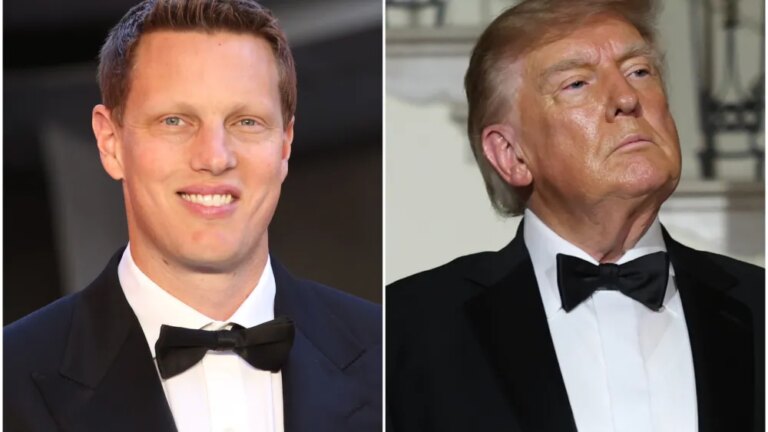
Pictured: Paramount CEO David Ellison attended President Trump’s state dinner on Sept. 24, capping a historic week.