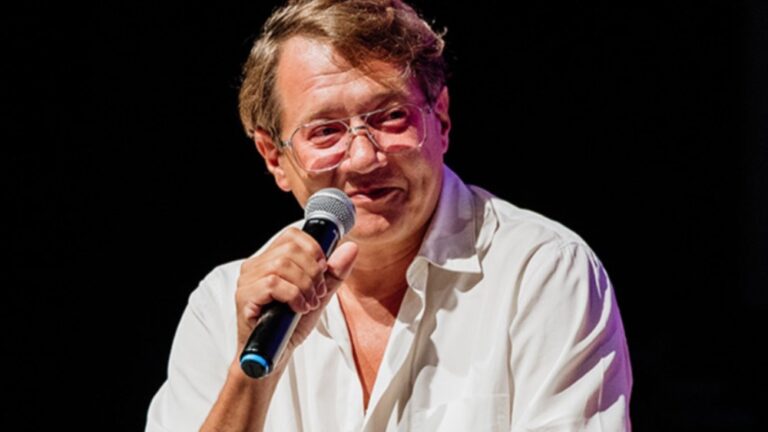
Ilya Khrzhanovsky, a Russian filmmaker, has been a prominent yet controversial figure in the world of cinema, primarily due to his ambitious and unconventional project, “DAU.” The project has sparked heated debates surrounding allegations of abuse and the intense nature of its execution. At the Sarajevo Film Festival, Khrzhanovsky addressed these concerns and defended his unique filmmaking methods, which have drawn both praise and criticism. This article delves into the controversies surrounding Khrzhanovsky and his defense of the “DAU” project, which he admits can be “disgusting to watch,” highlighting that “emotion is always brutal.”
A Defense of Unorthodox Methods
Speaking with Variety at the Sarajevo Film Festival, where he was honored, Ilya Khrzhanovsky responded to questions about the immersive and intense nature of his “DAU” project. The project, which involved thousands of participants living on a closed set for years, has led to accusations of on-set abuse and mistreatment, particularly of women.
“Not at all,” Khrzhanovsky asserted when asked about regrets. “I think the method was absolutely unique and perfect. Methodologically, I think I did everything right.” He emphasized the importance of examining his work without preconceived notions or succumbing to rumors. The filmmaker remains steadfast in his belief that art is the only realm where deep emotional exploration can take place, despite its brutal appearance.
The Emotional Core of “DAU”
The “DAU” project first garnered international attention at the 2020 Berlin Film Festival with the premieres of “DAU. Natasha” and “DAU. Degeneration.” Khrzhanovsky claims that the rumors surrounding the project have overshadowed the real emotions evoked during its creation. “The only protected place in our life where you can go very far with emotions is art,” he explained. Despite the allegations, several actors, including lead actress Natalia Berezhnaya, defended Khrzhanovsky’s methods.
The films, two out of a planned fourteen, were shot over nearly three years on a meticulously created set in Ukraine. It aimed to simulate life in a Soviet research institute, demanding participants adhere strictly to the roles they played, even off-camera.
Addressing Allegations and Artistic Intent
Reports have surfaced of a hostile environment during filming, particularly for women. Allegations include derogatory remarks and invasive questioning. At the Berlinale, Khrzhanovsky dismissed these claims as a misinterpretation of the project’s immersive nature. He described the experience as one testing the psychological resilience of its participants.
During a masterclass at Sarajevo, Khrzhanovsky elaborated on his approach, emphasizing the freedom allowed to actors during scenes of emotion. He stated that specific protocols were in place for scenes involving sex and violence, which were handled with caution.
A Personal Journey through Art and History
Born in Moscow and a graduate of the prestigious Russian State Institute of Cinematography, Khrzhanovsky has made significant contributions to film. In recent years, aligning with his distaste for Russia’s political climate, he renounced his Russian citizenship. His ties to Ukraine are deep, with familial connections and personal memories anchoring his artistic vision. The ongoing conflict in Ukraine has only solidified his determination to understand and depict the “mechanisms” of totalitarian regimes through his work.
“The meaning of this ‘DAU’ project was not so clear in 2019, 2020… But for me, it was important… to understand these kinds of mechanisms, how this kind of evil spreads between sometimes very good people,” he reflected. For Khrzhanovsky, the project is a mirror reflecting the complexities of human nature and history, both captivating and contentious.