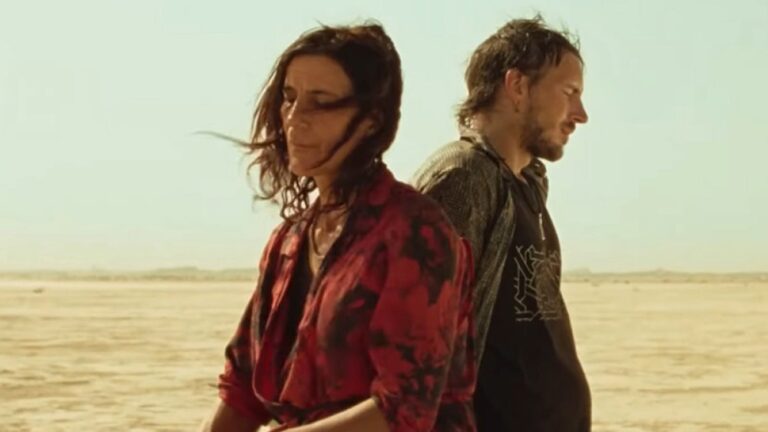
Creating the techno score for Oliver Laxe’s “Sirât” was a masterful undertaking by composer Kangding Ray. Known for its hauntingly powerful music, the film’s score is a key player in the narrative, effectively capturing the essence of the Moroccan desert. Kangding Ray masterfully wove synthetic sounds to embody the film’s ambitious and radical nature, establishing a deeper connection between the viewer and the storyline.
The Vision Behind the Score
“Sirât,” shortlisted for an Oscar in multiple categories, explores a father-and-son duo, Luis and Esteban, on a quest through desert raves in search of Luis’ missing daughter. Kangding Ray’s techno-driven score is integral to the film, beginning with an energetic 17-minute rave and transitioning into ambient soundscapes as the story unfolds.
Ray expressed how the film’s ambitious script immediately captivated him. “It was very clear that it was an ambitious project,” he noted. The radical elements and unique storytelling approach resonated with his artistic sensibilities, driving his desire to contribute to such a distinctive project.
Crafting the Techno Influence
The score’s techno elements were crucial, reflecting the film’s opening rave scene. Ray, with his background in experimental music, found these components straightforward to create. The challenge, however, lay in the transition to ambient soundscapes, which required balancing aggression, violence, and grief to support the narrative without dialogue.
Ray stated, “Finding the right amount of energy, aggression, violence, and grief was the most challenging part.” This intricate composition reflects the characters’ emotional turmoil as they traverse the harsh landscape.
Integrating Desert Elements
Ray’s use of modular synthesizers allowed him to infuse natural desert sounds into the score. The abstract nature of electronic music provided a canvas for innovation. “You don’t have a preconceived idea of what you’re going to end up with,” Ray explained. This flexibility enabled him to blend synthetic sounds with elements like wind and sand, crafting a soundscape that mirrors the vastness of the desert.
Collaboration with Sound Design
The collaboration with Laia Casanova, the sound designer, was pivotal in merging soundscapes with the score. Her recordings captured the authenticity of the rave environment and desert ambiance. Ray described the process as seamless due to Casanova’s puristic recording techniques, which aligned naturally with his musical compositions.
“Laia did a lot of recordings, and she had a very puristic approach,” Ray mentioned, emphasizing how this synergy enriched the auditory experience of “Sirât.”
The Impact of Music on Storytelling
A poignant moment in the film underscores the cultural significance of music. A character remarking that “music’s not for listening, it’s for dancing” highlights the transformative role music plays in personal and communal identities. Ray mused, “Music has a function. It’s something about discovering them yourself on the dance floor with your friends or your community.”
Ray’s score for “Sirât” not only complements the film’s visual narrative but also amplifies its emotional depth, creating an intricate tapestry of sound that resonates long after the credits roll.