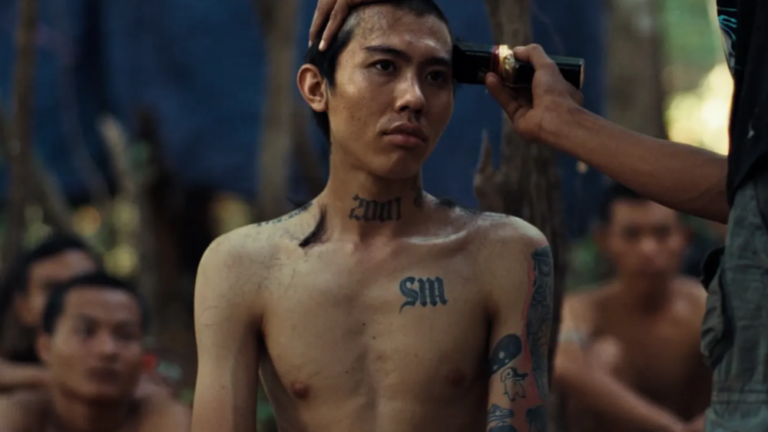
In 2021, Canadian photojournalist Bryan Dickie seized a rare opportunity to enter Myanmar, ten months after the military coup that toppled the democratically elected government. This pivotal trip sparked his passion for documenting the turmoil in the region, leading him to collaborate with longtime associates Robert Mentov and Dwight Jantzi. The trio returned to Myanmar two years later, focusing on the training of young recruits in the People’s Defense Force. Their six-week endeavor culminates in “White Tiger Column,” which is set to premiere at this year’s International Documentary Film Festival Amsterdam.
Behind the Scenes of a Harsh Reality
During their 45-day shoot, the filmmakers recorded the lives of trainees and their commanders preparing to take up arms. They employed an observational style to reflect the stark contrast between the mundane existences of these young individuals, who find respite in TikTok and pop songs by Taylor Swift and Justin Bieber, and the harsh realities of war.
In an interview with Variety, Dickie shared that his 15 years of experience in Myanmar—building deep ties with locals and engaging with the Burmese diaspora in Canada—provided him valuable insight into the geopolitical landscape of the country. Reflecting on the collaborative spirit of the project, Jantzi expressed that their close alignment in vision emerged naturally while shooting on the ground, working day-by-day to develop a cohesive narrative.
Navigating a Dynamic Environment
Jantzi noted the difficulty of planning additional trips to Myanmar due to the rapidly changing situation on the ground. “The reality is that the situation changes so much week by week that you can’t even really plan your characters six months ahead,” he remarked, expressing relief at their successful timing. The crews sought to stay attuned to local developments while forging connections with the diaspora and collaborating with Burmese filmmakers to maintain an appreciative and respectful approach to the material.
Mentov emphasized the team’s commitment to an observational filmmaking style, likening their arrival in Myanmar to that of the recruits themselves—immersed in a complex environment and striving to understand it. The film eschews the conventional narrative techniques of talking heads and extensive voice-overs, instead letting the camera linger on ordinary actions, imbued with significance given the film’s context. The filmmakers opted for longer lenses and a static tripod technique to create a sense of presence and weight in their frames.
Revolution Without the Violence
A deliberate choice made by the filmmakers was to sidestep explicit depictions of violence, focusing instead on training and discussions encircling conflict. “We talked a lot about wanting to make a war film that didn’t show war,” stressed Dickie. He acknowledged the complexity of conveying Myanmar’s situation to audiences unfamiliar with the region. “With this documentary, we tried to switch our approach; instead of delving into the hard details of Myanmar’s history, we focused on universal human themes like sovereignty, freedom, and longing for home.”
The Global Resonance of Youth Movements
This theme resonates deeply with the current political climate, where youth are championing movements for change worldwide. “White Tiger Column” will debut just weeks after significant political events in Brazil and Serbia, showcasing the influential role students have played in shaping their nations’ futures. There’s a palpable sense of urgency among younger generations to engage in the political discourse. “Revolution is on the lips of a lot of people,” remarked Dickie, with Jantzi adding that they hope the film serves as a portrait of what revolution could manifest globally.
Dickie characterized Myanmar’s Spring Revolution as a grassroots movement that is both beautiful and chaotic. Yet, he reminded audiences of the harsh realities beneath the rhetoric, with real lives at stake. “I talk to these guys weekly; they are still in the jungle fighting… this is war,” he cautioned, acknowledging the conflicting emotions that come with discussing revolutionary ideals.
Produced with Purpose
“White Tiger Column” is produced by Tom Edgerton for Lightwood Green, in co-production with Nocte Films and Rugio!