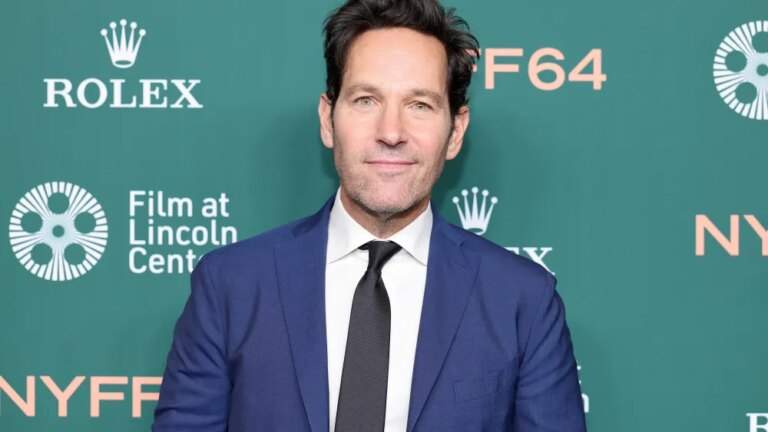
In a world increasingly dominated by digital distractions, Paul Rudd is taking a stand. During the world premiere of “A Statement” at the New York Film Festival, the actor shared his experiences on set, where he abandoned his smartphone in favor of deeper human connections. Directed by Oscar-winning filmmaker Tom McCarthy, the film tackles America’s climate crisis, bringing together a diverse group of experts at a Florida beachside resort in 1980. As tensions rise among the ensemble cast—including Paul Giamatti, Tatiana Maslany, and John Turturro—the characters must navigate their differences to craft a crucial statement to Congress regarding carbon dioxide emissions.
A Phone-Free Set: A Communal Experience
Rudd has made it a personal practice to forgo his phone on film sets for some time, believing it facilitates a more enriching collaborative environment. “I don’t go to sets with a phone. I haven’t done that for a while now,” he told Variety. “It’s important to put it down. Anytime. They’re horrible things. I’m addicted to it like everybody else. They’re facilitating our own destruction.” His commitment to a phone-free work environment resonated with the cast and crew, allowing for a more focused and intimate filmmaking experience.
Fostering Connection Through Absence
Director Tom McCarthy enforced a “very strict no phones policy” during the production of “A Statement,” a move Rudd found beneficial in bringing the cast closer together. “The world has changed since cell phones have existed. We don’t look at each other or talk to each other quite the same way,” Rudd assessed. The ban on mobile devices allowed for genuine interactions, evoking a nostalgic atmosphere reminiscent of conversations from an era before technology dictated communication. “We were forced to really spend time with each other and talk,” he added.
A Wake-Up Call for Filmmakers
Supporting this sentiment was Amy Ryan, who plays a pivotal role in delivering a wake-up call to the group at the film’s climax. She expressed her hopes that more filmmakers would adopt McCarthy’s approach, emphasizing that the lack of phone notifications allowed for richer interactions and storytelling. “What happens is there’s a five-minute break and people are connected. ‘Hey, what are you doing? How’s your morning? What do you think of this scene?’” she explained. Ryan likened the experience to quitting sugar: “In three days, it’s out of your system. You don’t miss it! And hopefully, it becomes like a toy you’re gonna get sick of.”