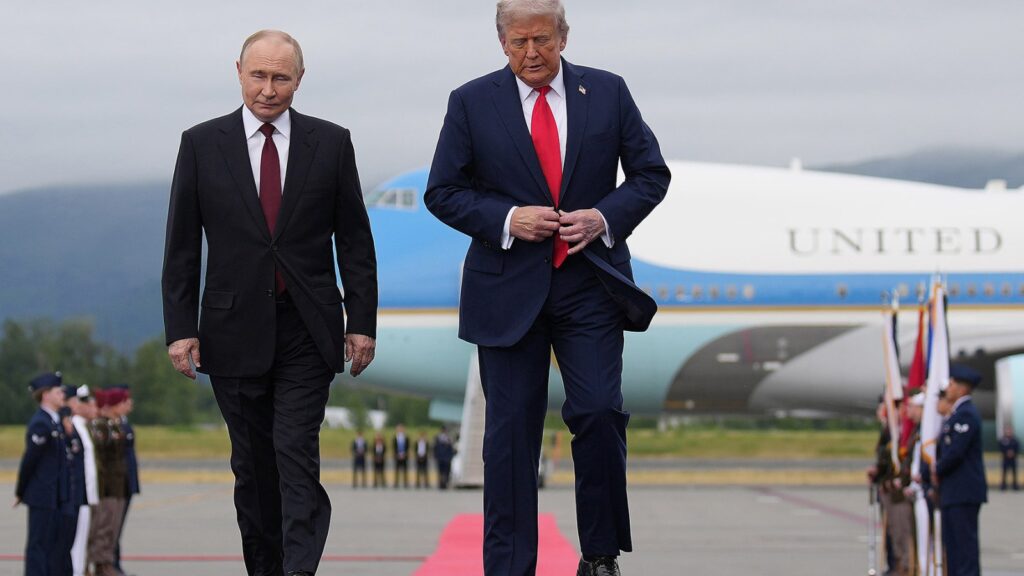
Inside Putin‘s fossil-fueled victory lap in Alaska, a complex geopolitical drama unfolded, highlighting the shifting alliances and power dynamics in the global arena. The summit between Donald Trump and Vladimir Putin underscored Russia’s ambitions as it sought to re-enter the world economy, even amid the ongoing conflict in Ukraine. The highly publicized meeting exposed strained Western alliances, as energy deals and political maneuvering took center stage. Here is an in-depth look at this significant moment.
The Alaska Summit: A Symbolic Meeting
The summit in Alaska was more than a political event; it was a showcase of Russia’s bold ambitions. With red carpets rolled out for Putin, the imagery alone sent strong messages across social media, especially in Ukraine. The symbolism of the meeting with U.S. President Donald Trump was not lost on observers. It illustrated a pivotal point in U.S.-Russia relations, dominated by discussions of energy investments rather than addressing the “Ukrainian question.” This shift marked a possible triumph for Russia, challenging previous geopolitical norms.
“Putin probably sees himself as having been able to score a major victory without paying anything for it,” commented Sergey Radchenko, a Cold War historian, emphasizing the weight of the meeting.
Energy Dominance and Economic Strategies
Fossil fuels were at the heart of the talks, reflecting Russia’s long-term strategy to re-establish its economic foothold. The summit involved significant discussions around U.S.-Russian energy cooperation, potentially easing sanctions that have constrained Russian revenues. Even as Ukraine attempted to counter with its offers, Putin’s regime made strategic moves by engaging U.S. companies in lucrative Arctic projects, enticing them with promises of vast oil and gas reserves.
Yuriy Vitrenko, former head of Ukraine’s state energy company, viewed these developments with caution, noting, “For Putin, energy is the pillar of Russia’s strength.”
The Protest in Anchorage
Amid the high-stakes negotiations, the voices of dissent were not silent. In Anchorage, hundreds gathered to protest against the war in Ukraine, waving Ukrainian flags and signs pleading for peace. Among them was Mariia Freeman, a Ukrainian refugee from Luhansk, who became a symbol of resilience and resistance. She vocalized the sentiments of many, reflecting the global anxiety over the changing political dynamics.
“Seeing hundreds of people turn up…was empowering,” Freeman shared, illustrating the emotional weight of the ongoing conflict.
A New World Order?
The Alaska summit could signify a shift in world power dynamics, where traditional alliances are tested, and economic interests weigh heavily on diplomatic decisions. Trump’s interactions with Putin appeared to redefine U.S. policy orientations, raising concerns about the implications for international peace and stability.
Energy consultant Yuliia Melnyk pointed out, “One of the key solutions to this war is breaking dependence on fossil fuels,” underlying the broader global stakes.
As the world watches the fallout from the summit, the intricate dance of geopolitics continues, suggesting a recalibration of strategies that challenge conventional geopolitical wisdom. Mariia Freeman and others who stand in defiance of these changes remind us of the human cost at the heart of such grand political maneuvering.