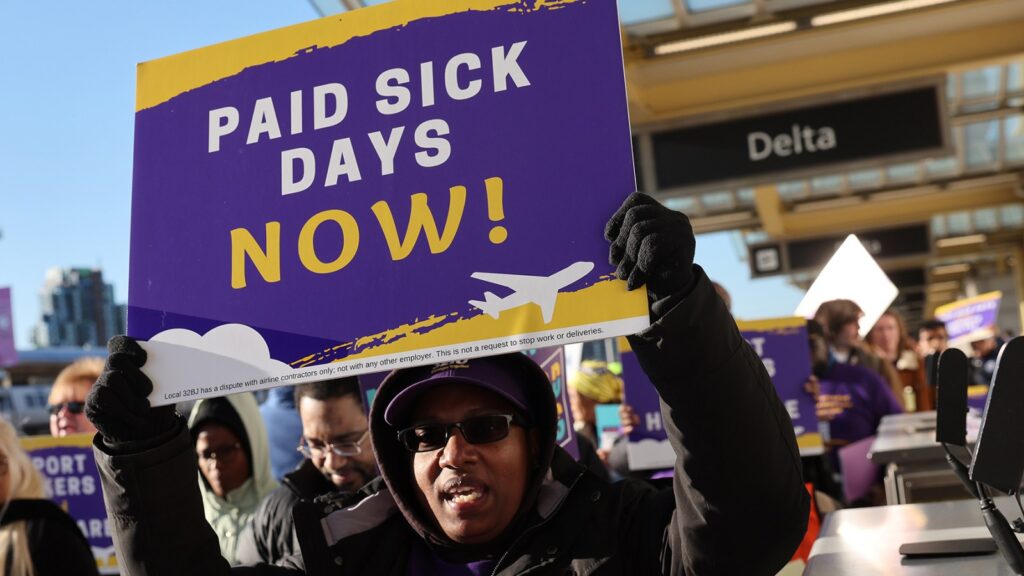
In the ongoing debate over health care and workers’ rights in the United States, a critical dimension often overlooked is the erosion of paid sick leave. As policies become increasingly fragmented at the state level, millions of Americans find themselves navigating a precarious landscape. While the gutting of health care services garners significant attention, the impact on sick leave provisions is equally profound. This article delves into how Republican legislation affects these vital aspects, leaving a substantial portion of the workforce vulnerable.
The State of Sick Leave in America
In the U.S., the absence of a federal mandate for paid sick leave creates a stark disparity across the workforce. Data from the Bureau of Labor Statistics highlights that 26.5 million private sector and government employees lack access to this essential benefit. This gap is most pronounced among low-income, part-time, and service sector workers, exacerbating existing inequalities. With only 41 percent of the lowest earners having paid sick leave, compared to 94 percent of the top earners, the divide is clear.
Political Maneuvering and State-Level Battles
Despite strong public support, several Republican-led states are actively rolling back sick leave provisions. In Missouri and Nebraska, referenda guaranteeing paid sick leave were swiftly repealed or altered, undermining voter intent. In Alaska, regulations narrowed the scope of existing laws. Industry groups, notably in sectors like restaurants, have vocally opposed such mandates, citing financial burdens. Yet, advocates argue that paid sick leave ultimately benefits both businesses and public health.
The Impact of Federal Inactions
The national landscape remains bleak, as key measures like the Families First Coronavirus Response Act (FFCRA) were allowed to expire without renewal. Research indicates that such policies not only curbed disease spread but also did not disrupt businesses. The reluctance to enshrine paid sick leave into federal law parallels broader health care rollbacks, including historic Medicaid cuts. Republicans’ actions in both spheres threaten to deepen health inequities and destabilize rural health centers reliant on Medicaid.
Advocacy and the Path Forward
For proponents of paid sick leave, the connection between these policies and overall health outcomes is undeniable. Lawmakers like Rep. Rosa DeLauro and Sen. Tina Smith emphasize the practical and ethical imperatives of preserving these benefits. They argue that denying paid sick leave compromises public health and economic stability. The challenge lies in overcoming entrenched industry opposition and legislative inertia to ensure that all Americans can balance health needs without risking their livelihoods.