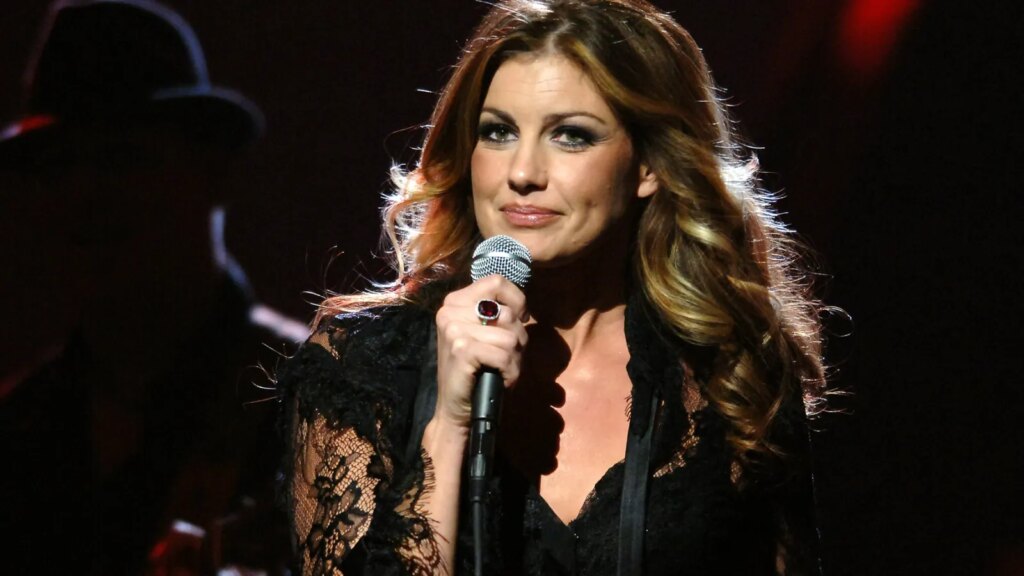
In a heartfelt moment during his induction into the Country Music Hall of Fame on October 18 in Nashville, Tim McGraw articulated what many in the audience felt. “The only thing that can beat this night,” he remarked from the stage, “is when you’re standing here and I’m sitting there,” referencing his wife, Faith Hill, who watched with pride alongside their daughters, Maggie and Audrey. While McGraw undoubtedly recognized Hill’s talent and worthiness for the Hall of Fame, one can’t help but think he was echoing a collective wish for her return to the limelight.
Indeed, it’s been nearly 20 years since Hill released her last non-holiday solo album, 2005’s Fireflies. Her most recent musical endeavor was the 2017 duets record The Rest of Our Life with McGraw, and her last public performance was a livestream fundraiser organized by CMT during the pandemic in 2020. Since then, she has largely retreated from the public eye, focusing on her family and her acting career, which includes a role in the Paramount series 1883. Hill has also been active in various charitable initiatives, notably advocating for changing the flag of her home state in 2020 due to its Confederate symbol. “We have to realize that this flag is a direct symbol of terror for our Black brothers and sisters,” she expressed on Twitter.
While Hill has not completely vanished from public life—often seen attending events with her family—her presence has dwindled significantly. In 2024, she deleted her social media accounts, which many admire as a pursuit of peace. Additionally, her official website, FaithHill.com, now returns a blank screen, emphasizing her absence in a musical landscape that feels lacking without her influential voice. Hill’s unique style and contributions have left an imprint on a generation of country artists, particularly female singers who have blended pop and soul into the genre, paving the way for future talents.
Editor’s picks
The dialogue surrounding Hill’s impact often feels incomplete. Though her chart-topping hits, such as “Breathe,” are mentioned in passing—particularly when discussing the peak of female-driven country music in the 1990s—her extensive influence and success are frequently undervalued. It’s striking that conversations about the remarkable achievements of artists like Ella Langley sometimes overlook Hill, who broke records and rendered the country/pop hybrid commercially viable. Her debut single “Wild One” made her the first female country artist in three decades to reach the top of the charts, leading to substantial crossover success.
Hill has long been celebrated as one of the genre’s most exceptional vocalists. Her ability to glide through complex lyrics, such as those in “This Kiss,” and deliver emotionally charged live performances set her apart in country music. Despite this, the music industry has not always embraced her innovative approach, particularly evident in the reception of her 2002 album Cry. In a time that leaned toward jingoistic themes, the title track failed to soar in popularity despite eventually winning a Grammy. Critics dismissed it, urging Hill to stick to a more traditional sound, ignoring her career-long exploration of genre boundaries.
Trending Stories
Related Content
“Everything is a risk for me,” Hill shared with the Globe and Mail in 2002. “Making this album is a risk. It’s progressive and sounds so different. That’s what they said about Breathe. But in order to grab the fruit, you have to go out on a limb. I don’t walk a straight line.” This spirit of risk and innovation has inspired a new generation of artists, including Taylor Swift, Kelsea Ballerini, Carrie Underwood, and Megan Moroney, even if the country music community hasn’t always acknowledged her contributions.
The ultimate question remains: Will Faith Hill ever reclaim her place at the forefront of country music? One can only hope. Her unique perspective on the genre and her unwavering convictions would be a welcome addition to a field that often sidelines the stories of women as they age. Perhaps a collaboration with a contemporary producer like Brandi Carlile could reignite Hill’s musical career. However, if she chooses to remain focused on her family and philanthropic work, it shouldn’t diminish her esteemed status in the history of country music. In the end, her influence remains undeniable and, as she reflects on the genre’s “centrifugal motion,” we can only cherish the legacy she has already built.