With a blend of enchanting visuals and intriguing narrative ambitions, “100 Nights of Hero” strives to mix fairytale whimsy with poignant storytelling. However, this fantasy romance, directed by Julia Jackman and inspired by Isabel Greenberg’s graphic novel, doesn’t entirely harness its full potential. While the film draws inspiration from the classic “One Thousand and One Nights,” its approach doesn’t quite capture the enchanting allure of its ancient predecessors. “100 Nights of Hero” is a mischievous fairytale whose bold concepts are somewhat undermined by a more reserved execution.
A Magical Yet Misguided Beginning
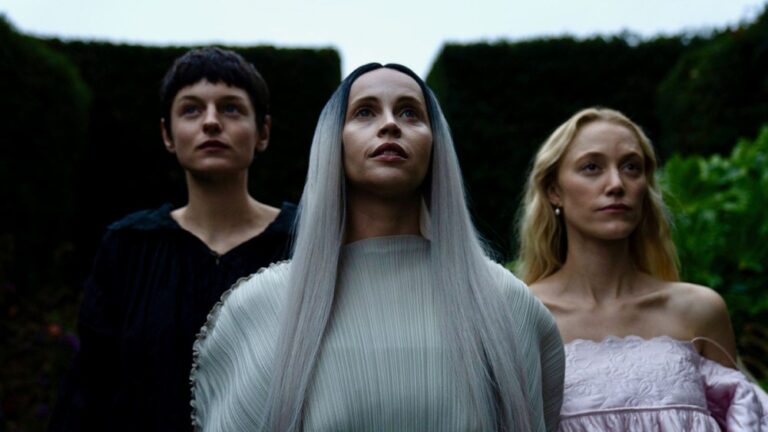
Rich in costume and production design, the film starts with a mischievous flair. Narrated by Felicity Jones, the story unfolds around a child with divine powers named “kiddo” (Safia Oakley-Green) who challenges her father, “Birdman” (Richard E. Grant), by bringing humanity into existence. This magical premise transitions to a Victorian setting where Cherry (Maika Monroe) is trapped in a loveless marriage with Prince Jerome (Amir El-Masry), tasked with producing an heir. However, it’s Cherry who is unfairly blamed for their childless union.
Intrigue and Forbidden Stories
Cherry’s ally, Hero (Emma Corrin), acts as her confidant, providing emotional support. When Jerome leaves, he bets his friend Manfred (Nicholas Galitzine) could seduce Cherry in his absence. Though Cherry is drawn to Manfred, Hero’s nightly storytelling offers her a refuge. These tales, which involve powerful women in equally challenging situations, are intended to distract and enthrall but often lack depth and fantastical engagement.
A Hidden Narrative Power
Hero’s stories are laced with themes of witchcraft and enchantment that blur time for Manfred, enhancing the castle’s dreamy atmosphere. Despite this, the stories themselves are lackluster, featuring familiar scenarios like that of Rosa (Charli XCX), caught in an unhappy engagement. As the narrative unfolds, hints of a secret society of storytellers emerge, suggesting narratives as tools against gendered oppression, though these points land softly rather than powerfully.
Understated Passion and Aesthetic Constraints
The core relationship between Hero and Cherry holds promise, but neither their romantic nor platonic dynamics receive enough depth to ignite true passion. The film often narrates rather than shows, skimming over its feminist themes. Humorous moments pepper the film, akin to a restrained Wes Anderson style, but the movie’s visual execution feels static. It seems confined to its source material, preventing exploration of chemistry and aesthetic innovation.
Despite its shimmering fairytale appearance, “100 Nights of Hero” remains emotionally distant. Its performances, caught in hazy visuals, lack vibrant life, reducing the characters’ desires to mere abstractions. While visually appealing, the film falls short of capturing the enchantment and vigor necessary to truly convey its themes of love and rebellion against patriarchal structures.