The 39th Tokyo International Film Festival has garnered attention following the announcement by the International Federation of Film Producers Associations (FIAPF) designating it as one of the 17 officially recognized A-list festivals. However, the impact of this classification on the festival’s operation remains a topic of debate among industry professionals.
A Recognition That Affirms Tokyo’s Status
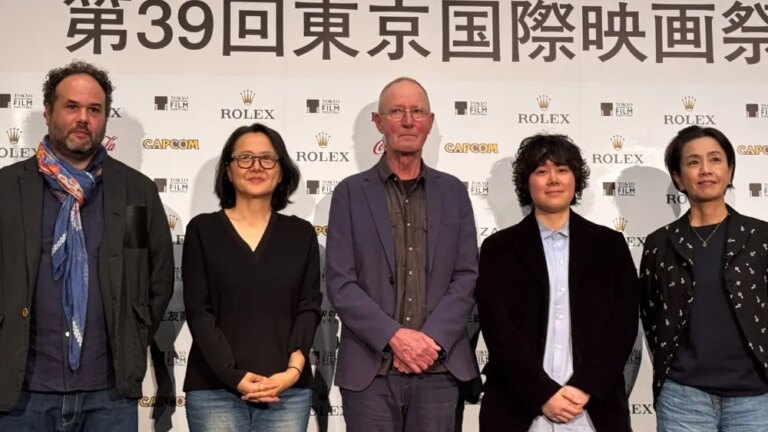
Rolf de Heer, the Australian filmmaker known for works such as “Bad Boy Bubby” and “Ten Canoes,” expressed his thoughts on the significance of the newly established A-list status during the festival’s jury press conference. He noted that the Tokyo festival has long been regarded as an A festival by attendees, suggesting that the formal recognition may not alter its essence. “Tokyo has always been considered one of those festivals by most people who attend festivals. Tokyo was effectively an A festival. And so in that sense, I don’t think it makes a lot of difference,” said de Heer.
While de Heer acknowledged that the new classification could enhance the festival’s ability to attract high-quality films, he reiterated that the fundamental experience of the festival would likely remain unchanged. “It may help that it is officially now again A, but I don’t think it changes the festival so much,” he added.
The A-List: A Double-Edged Sword
Earlier in March, FIAPF transitioned from a multi-category accreditation system to a simplified list, officially naming 17 festivals, including Cannes, Berlin, Venice, and Toronto, as A-list events. Interestingly, Busan and Toronto secured this prestigious status for the first time. Korean producer Oh Jungwan, founder of Bom Film Productions, resonated with de Heer’s perspective, stating, “I don’t know what is A-list or not. So maybe probably A-list means good, but as an audience, we’re not going to the festival because of their A-list or not. We just go to watch film and enjoy the feeling, the festival feeling.”
When pressed by a journalist regarding the implications of ranking festivals, de Heer candidly responded, “It matters a great deal to some people, and not at all to others. And that is as it should be.” This sentiment captures the diverging opinions within the industry about the importance of festival classifications.
Future Prospects for Co-Productions
De Heer also discussed the potential for Australia-Japan co-productions, expressing skepticism about the practicality of such collaborations. “It makes no sense for a Japanese film to shoot in Australia, it makes no sense for an Australian film to shoot in Japan,” he articulated. He emphasized that successful co-productions are more likely to arise from innovative narratives that justify the need for filming in both countries, contingent upon appropriate scripts being developed. In light of changes in funding dynamics, Alex Lo, a New York- and Tokyo-based producer, noted that producers from Europe and the U.S. are increasingly seeking co-production opportunities due to dwindling local government support.
The Challenge of Jury Decisions
As the jury prepares to select the Tokyo Grand Prix from 15 competition titles, de Heer addressed the potential for differing opinions among jury members. He conveyed confidence in their ability to reach a consensus, stating, “I’m with four other very reasonable people, and I’m sure we can find a way through that we don’t end up with some sort of lesser compromised film, but a really interesting film that maybe some of us don’t like.”
Oh, returning to the jury for a second time, humorously recalled a past experience where she argued for a film for seven hours, remarking, “Every other jury [member] hated me.” She expressed hope that such lengthy debates would not be necessary this time around.