In an industry marked by uncertainty and fluctuating opportunities, actors often find themselves navigating precarious financial waters. Cheyenne Jackson, a versatile performer known for his roles in numerous television series such as “Imperfect Women,” “American Horror Story,” “Call Me Kat,” “Glee,” and “30 Rock,” recently faced a dilemma that many in Hollywood can relate to—nearly losing his SAG-AFTRA health insurance.
Facing Financial Challenges
Last year, Jackson, who has acted in over 40 TV series and several films, came perilously close to falling short of the annual minimum earnings requirement of about $28,000 needed to maintain his health insurance—a lifeline that extends to his husband, Jason, and their two children. “I was one gig short of getting my insurance,” he recalls. “We really rely on the SAG insurance. It’s really good.”
A Call for Help
In a moment of need, Jackson reached out to his friend and fellow actor Kathy Bates, who stars in “Matlock.” He needed to secure an additional $6,000 to stay eligible for his health benefits. “I called her, and I was like, ‘Listen, I’m in trouble and I could really use your help. Is there anything I could do on “Matlock”?’” he shares. Bates responded swiftly, offering him a role. However, the catch was that he would only have five lines and no character name. “I was like, ‘Sign me up! No ego amigo here,’” Jackson said, humorously recounting his experience as a “no-name detective.”
Launching ‘One Job Away’
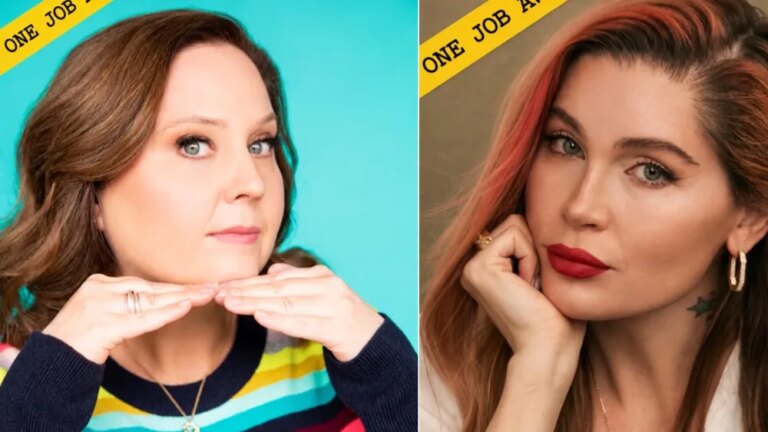
In the spirit of paying it forward, Jackson recently launched the “One Job Away” initiative. Through this campaign, he is posting headshots and bios of actors who are on the verge of losing their SAG-AFTRA health insurance on his Instagram feed. In less than 24 hours, he has received hundreds of submissions and has shared 22 headshots, including those of actors like Juston Graber, who is just $198.48 shy of qualifying for the insurance, and Miho Saito, who is $402 away. Notable names like Independent Spirit Award nominee Trace Lysette and “Mean Girls” star Daniel Franzese also feature in his posts.
Highlighting Systemic Issues
With 741,000 followers on Instagram, Jackson understands the significant issues surrounding the current SAG-AFTRA structure. “The bigger conversation is just the way that residuals and SAG are set up,” he explains. “I make OK money on residuals, but a lot of that residual does not go toward your SAG dues. You’re essentially starting over every year.” He elaborates that an actor might earn $500,000 in one year, but the lack of consistent earnings the following year could jeopardize their health insurance coverage. This situation affects not only newer actors but seasoned professionals who have led multiple shows throughout their careers. “They are scrambling for one little guest spot to try to keep their insurance,” he laments.
A Growing Concern in the Community
The issue of SAG-AFTRA health insurance is becoming increasingly pressing, as highlighted by fellow actors like Jamie Lee Curtis, who has publicly supported Jackson’s initiative by reposting some of his “One Job Away” posts to her own significant following. Adding to the discourse, actor Drake Bell recently criticized the union for denying him coverage. After learning he fell short of the earnings requirement, he shared his frustrations on social media, advising against pursuing acting altogether due to the stringent insurance requirements.
Jackson maintains a constructive approach, avoiding direct criticism of SAG-AFTRA leadership. “I don’t want to play a blame game,” he stated. “What I do want to do is start engaging in a bigger conversation because clearly the system is not working right now.”
As the entertainment landscape continues to evolve, the challenges faced by actors regarding health insurance underscore the need for systemic reforms to support artists at all stages of their careers.