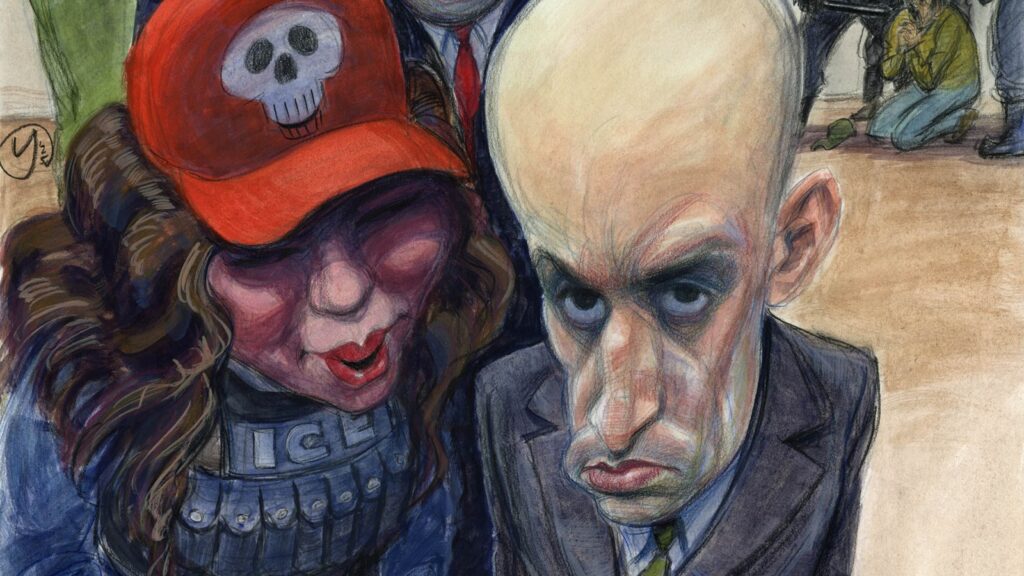
Stephen Miller’s name has become synonymous with a polarizing era of policy-making during Donald Trump‘s presidency. Known for his hardline stances, particularly on immigration, Miller’s influence extended deep into the corridors of power. This article delves into the intricate fabric of Miller’s potent presence in the White House and the far-reaching effects of policies crafted under his guidance. Unveiling the dynamics of his “Reign of Terror,” both his admirers and adversaries provide a layered understanding of his political legacy.
The Night of Triumph
In the early hours of November 6, there was no one more jubilant at the Hilton West Palm Beach than Stephen Miller. As Donald Trump declared his victory, it marked not only a triumph for him but also for Miller, who stood at the epicenter of policy-making in the White House. A celebrated architect of Trump’s key agendas, particularly his stringent immigration policies, Miller was a pivotal figure who thrived amidst the optimism and reverie of Republican supporters.
Amid a sea of congratulations, Miller was poised for a future brimming with possibilities. His influence was undeniable, and to many, he embodied the core of the administration’s ideological blueprint.
Rising to Unelected Power
Stephen Miller emerged as one of the most influential unelected officials, orchestrating policies with sweeping implications. While Trump signed the orders, it was Miller’s handiwork that crafted intricate legal theories and executive actions. His role extended into the reshaping of immigration laws, leaning on a vision not shared by all his contemporaries. Critics argue that his policies transformed law enforcement and immigration into mechanisms of control and fear.
Under Miller’s guidance, constitutional protections seemed more vulnerable, and the machinery of government morphed into a tool of political retribution. His vision included a militarized approach, whereby domestic unrest could justify the deployment of armed forces in American cities, reshaping the country’s landscape.
The Man Behind the Titles
Nicknamed “Prime Minister Miller” or “Shadow Sec Def,” his influence was both profound and unsettling for some within the administration. Even as whispers circulated about his demeanor, Miller remained unfazed, driven by a commitment to his ideological beliefs. Friends and colleagues regarded him as an intense, relentless figure, unwavering in his pursuit of policy goals.
His past reveals a trajectory marked by provocative political maneuvers and a deeply ingrained worldview. Known for his loyalty to Trump and his assertive approach to policy enforcement, Miller continued to be a central figure in pushing the administration’s agenda.
A Legacy of Controversy
For all the accolades from allies, Miller’s tenure also left a wake of controversy and division. His approach to immigration and border enforcement became a defining characteristic of his tenure. Stories of families being torn apart under stringent deportation policies highlighted the human costs of his strategic decisions. These policies, often perceived as harsh, were rooted in his vision of national security and sovereignty.
For Stephen Miller, the emotional appeal of these “sob stories” was merely a tool of manipulation, unworthy of his administration’s attention. His focus remained steadfast on what he believed were the pressing issues threatening the nation.
The narrative of Stephen Miller’s “Reign of Terror” underscores a pivotal chapter in American politics—one that reflects both the fervor of his supporters and the grievances of those who bore the brunt of his policies. His legacy is not easily categorized, intertwining themes of power, influence, and the contentious undercurrents of modern governance.