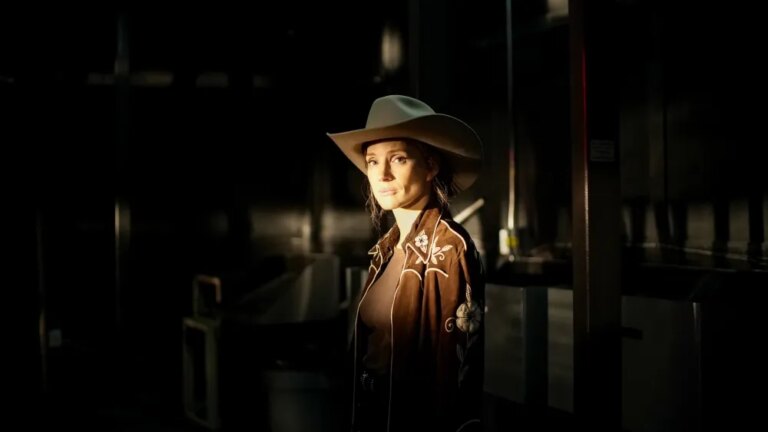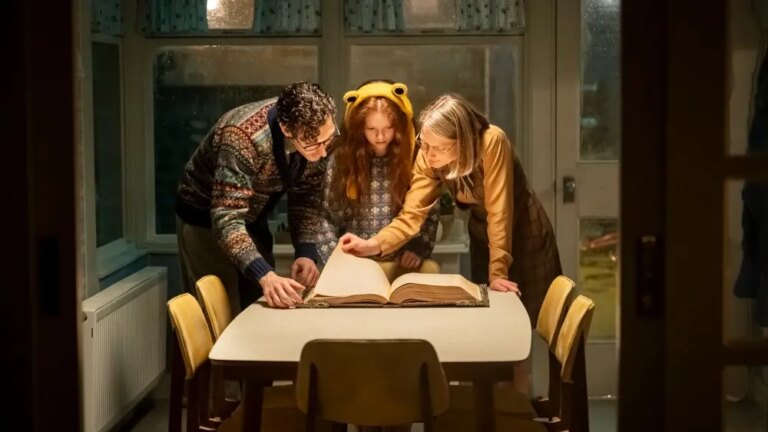
The return of Danny Boyle to the zombie genre with “28 Years Later” brings an exhilarating experience to the big screen, offering fans a thrilling chase sequence and innovative zombie encounters. Key to these exciting scenes is the use of a soundstage to create the bloody zombie kills and the terrifying Alpha chase, making every moment feel viscerally real. Discover how this was achieved with cinematic creativity.
Heart-Pounding Chase Across the Causeway
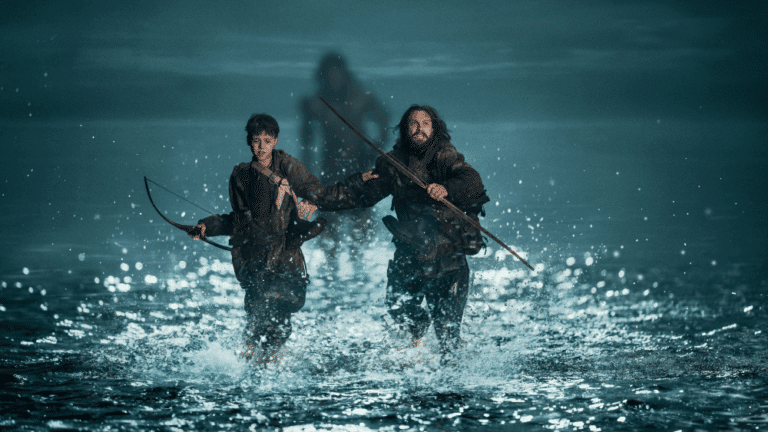
The climactic chase sequence in “28 Years Later” is a standout moment. After Jamie, played by Aaron Taylor-Johnson, and his son Spike, portrayed by Alfie Williams, navigate their way to the mainland, they must make a perilous return across the causeway to Holy Island. As they attempt their escape, they face a formidable foe: The Alpha, a stronger, more evolved version of the infected. This thrilling pursuit showcases the intensity and danger of their journey, as The Alpha closes in nonstop.
Filming this intense scene required careful planning. Cinematographer Anthony Dod Mantle and the crew scouted various locations around Newcastle and North Yorkshire, but the unpredictability and potential hazards of real water settings posed significant challenges. Eventually, they settled on an indoor location, transforming an ex-COVID vaccination center into a controlled environment that simulated the causeway.
Creating the Illusion of Reality
A key challenge was mimicking the natural environment. “We built the causeway ourselves, and it was 450 feet long,” Dod Mantle explains. The team filled the area with water and controlled its temperature, adding an imposing gate in the middle to heighten the drama. VFX were employed to enhance the sky, using astronomical images to create a sense of an unpolluted world.
The action was intensified using an array of filming equipment. “We had cranes, tracks, and technocranes to capture the swift movements,” says Dod Mantle. These techniques offered thrilling perspectives as Jamie and Spike raced against time, with The Alpha’s relentless pursuit feeling terrifyingly close.
Innovative Approaches to Zombie Kills
The creativity extended to the depiction of zombie kills. Dod Mantle expressed initial concerns about the aesthetic of using bows and arrows, a departure from conventional weaponry. Reflecting on old Robin Hood films, he innovated with bar cameras to prolong the tension of key moments. This choice provided a dynamic and visually captivating experience, wrapping the action visually around the viewer.
“Danny tapped into something precise about survival,” Dod Mantle notes, capturing the primal shift away from modern weaponry to more basic tools of survival.
The Eerie Presence of the Slow-Lows
Adding another layer of horror were the Slow-Lows, a new form of zombie. Unlike their faster counterparts, these bottom feeders added a stealthy menace to the film. Dod Mantle describes the careful crafting process behind their appearance, involving extensive prosthetic work that created an eerily unsettling presence.
A particularly chilling scene unfolds as Jamie and his mother, played by Jodie Comer, seek refuge in a desolate church. The menacing tension mounts as a Slow-Low approaches, mistaking Jamie’s shoelace for a worm. “That’s my worst nightmare,” Dod Mantle says, emphasizing the haunting unpredictability of these creatures.
Boyle’s attention to detail and his knack for blending horror with subtle comedy make “28 Years Later” a gripping addition to the genre, pushing the boundaries of what a zombie film can achieve on a soundstage.