Throwing a successful dinner party is like orchestrating a delicate ballet: everything from the food and entertainment to the seating arrangements must be perfectly balanced. However, the most critical element remains the guest list. Recently, President Donald Trump hosted a state dinner with Chinese President Xi Jinping, marking one of the most significant gatherings of power during his second term. This lavish event was a star-studded affair, showcasing not only Trump and Jinping but a roll call of influential figures from America’s political and business elite.
The Trump-Xi State Dinner guest list, per the White House:
President Donald J. Trump
First Lady Melania Trump
President Xi Jinping
Madame Peng Liyuan
Vice President JD Vance
Second Lady Usha Vance
Secretary of State Marco Rubio
Jeanette Rubio, Spouse of the Secretary of State…
— Josh Wingrove (@josh_wingrove) September 24, 2026
The guest list for this state dinner was extensive, totaling 134 names that included giants from the realms of industry, technology, and media, alongside prominent Republican figures. Hosting such a dinner aimed to impress the Chinese delegation while simultaneously signaling the indispensable roles these attendees play in shaping the future of Trump’s MAGA movement.
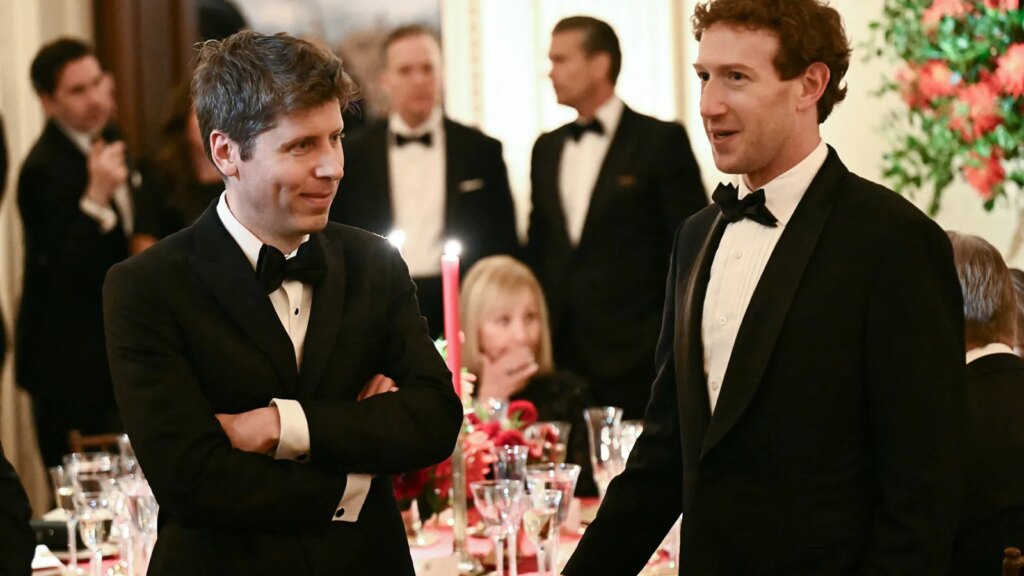
Among the expected high-profile attendees were key players in the tech sector, such as Mark Zuckerberg, Sam Altman, Elon Musk, Jeff Bezos, Sergey Brin, and Tim Cook. Notably, Nvidia CEO Jensen Huang stood out, having cultivated a close relationship with Trump amid the AI boom, even featuring Trump on speakerphone during public events. Lisa Su, the CEO of Advanced Micro Devices, also graced the dinner, representing the competitive semiconductor arena.
Securing a spot at a table during this dinner can denote various connections. Some attendees, like Miriam Adelson, widow of Tycoon Sheldon Adelson and a significant donor, reflect a blend of loyalty and financial influence, while others possess vital expertise that the administration seeks to maintain. Despite Trump’s connections, the overarching issue of global turmoil—such as the ongoing conflict in Iran—remains a crisis none of these attendees can independently resolve.
Editor’s picks
Elsewhere on the guest list were various media personalities and political influencers, including Jesse Watters of Fox News and fellow primetime hosts Brett Baier and Laura Ingraham, who enjoy a close rapport with the Trump administration. Notably absent was Lachlan Murdoch, the heir to the News Corp empire. Additionally, conservative Supreme Court Justices John Roberts, Amy Coney Barrett, and Brett Kavanaugh—who have occasionally diverged from Trump’s views—were also in attendance, contributing to a mix of legal and media influence.
Trending Stories
Adding more weight to the list were other political figures such as Speaker of the House Mike Johnson and several of Trump’s cabinet secretaries, alongside representatives from major industries, including oil executives from American companies like ExxonMobil. Notably present were banking leaders Jane Fraser of Citigroup and Jamie Dimon of JP Morgan, highlighting the extensive connections within the upper echelons of American society.
Related Content
While none of these names were particularly surprising, their assembly at a single event offers a revealing snapshot of power dynamics in America. The significance of a state dinner with China, arguably the key international relationship for the U.S., underscores the importance of having such elites in attendance. These are players who refuse to decline invitations to participate in crucial dialogue and influence. Yet, media coverage of the dinner, excluding some participants like Watters and his colleagues, was remarkably limited, leading to a veil over the discussions and dealings in that room. The true implications of their conversations remain obscure to the general public, leaving ordinary citizens in the dark about how influential figures negotiate their interests and position in the political landscape, while many strive simply to provide for their families.