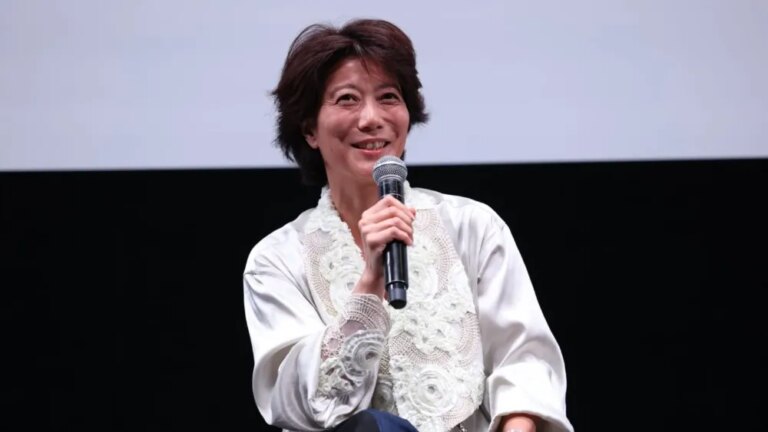
Renowned for her exploration of complex emotional landscapes in films like the award-winning “Dear Etranger,” director Mishima Yukiko has taken a new direction with her latest work, “Two Cigarettes, Three Nights.” This film, currently featured in competition at the 39th Tokyo International Film Festival, marks a departure from her traditional themes of dark relationship dramas.
From Novel to Screen
Adapted from a 2014 novel by Chihaya Akane, “Two Cigarettes, Three Nights” follows Kanna, a picture book illustrator portrayed by Matsuoka Mayu. Kanna finds herself increasingly disillusioned with her live-in boyfriend, played by Inoue Yuki, while her relationship with a married lover, Nakajima Ayumu, remains purely physical. When a former college friend, Haseo (Narita Ryo), unexpectedly returns to her life after seven years, he becomes a confidant in her moment of uncertainty.
A Fresh Take on Familiar Landscapes
The film was shot in notable locations including Kyoto, Hiroshima, and Toyama Prefecture. Mishima adeptly navigates these settings, ensuring that they are visually dynamic without succumbing to clichéd imagery typical of tourist spots. Instead of conventional backdrops like temples and cherry blossoms, Kanna and Haseo’s interactions unfold along riverbanks and railroad tracks, portraying a renewed friendship that flirts with deeper intimacy.
Mishima emphasizes that her choice of locations is not purely aesthetic. “When deciding on a location, it’s not just about picking a ‘pretty’ spot,” she states in an interview at Tokyo Midtown, the main venue of the festival. The goal was to choose places where the narrative naturally comes alive.
Walking and Talking: A Personal Connection
Reflecting on her own experiences, Mishima describes how she and a male friend would often walk and chat for hours, navigating their thoughts without directly confronting heavier issues. This personal anecdote informs the film’s narrative style, as Kanna and Haseo remain side by side, their conversations flowing with a sense of intimacy and humor.
Character Dynamics and Influences
In crafting their relationship, Mishima strategically avoids having Kanna and Haseo face each other at first, preferring to have them look in the same direction, symbolizing their shared journey. “I didn’t want them to do that until a certain point,” she explains, underscoring her intention for their dynamic. Her approach draws inspiration from the cinematic style of Ozu Yasujiro, who often depicted characters engaged in parallel movements, capturing the essence of Japanese life with grace and continuity.
The film’s narrative begins with hints of a sex comedy, leveraging the comedic talents of both Matsuoka and Narita. However, it evolves into a more nuanced exploration of intimacy, closing with an open ending that encourages interpretation. Mishima asserts, “Having a good sense for comedy was essential for the long dialogue scenes… It makes a huge difference.”
Complex Characters and Emotional Richness
Despite moments of lightheartedness, Kanna and Haseo are not always relatable, sometimes displaying selfishness and cruelty. Mishima believes in portraying the complexity of human nature: “I think movies should be able to portray all kinds of people and tell all kinds of stories.” This multidimensionality invites viewers to identify with the characters’ moral ambiguities, ultimately fostering a deeper connection to their emotional landscape.
Additional characters, including a cynical bartender and Kanna’s candid college friend, offer varied perspectives on love and betrayal, enriching the narrative complexity. “I wanted to present the story in a multi-layered way,” Mishima notes, indicating that while the Japanese title suggests a focus on friendship, the film ultimately shifts toward Kanna’s personal revelations as she spends time rediscovering herself through her interactions with Haseo.
Art as Reflection
Throughout the film, Kanna’s artistic journey parallels her emotional growth. As she grapples with her experiences over the three pivotal days with Haseo, she manages to create a painting that encapsulates her newfound understanding of herself and the world. “What I want to convey is embedded in that final painting,” Mishima explains. The culmination of this artistic expression serves not only as a reflection of Kanna’s journey but also as a poignant takeaway for the audience, blending personal discovery with broader themes.