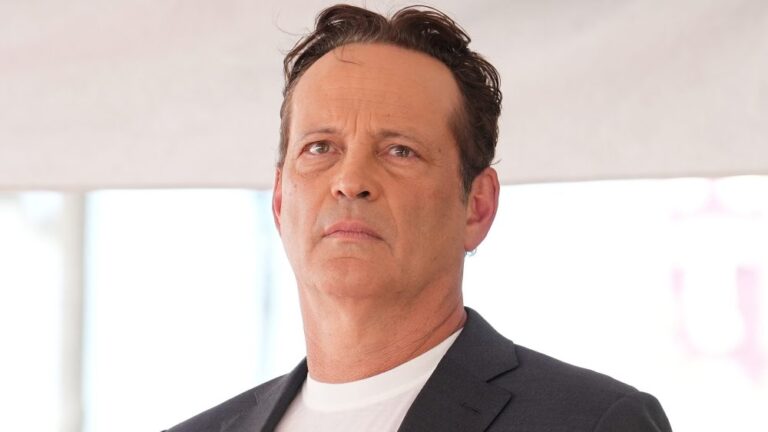
Vince Vaughn Criticizes Late Night TV for Having Political Agenda
Vince Vaughn has recently shared his candid views on the late-night television landscape, specifically critiquing how it has become increasingly intertwined with political agendas. During a compelling episode of Theo Von’s podcast “This Past Weekend,” Vaughn expressed concerns over the direction late-night comedy has taken, arguing that it has become less about humor and more about promoting specific ideologies. As he delves into the cultural shift within entertainment, Vaughn highlights the risks of alienating viewers by taking sides in a polarized political environment.
A Shift in Comedy’s Landscape
In his conversation with Theo Von, Vaughn noted that while discussing current events is an inherent part of comedy, he believes comedians should avoid aligning too closely with any one ideology. “It’s part of the job because you’ve got to talk about current events, but you don’t want to become part of a group and feel like you’re a champion for one ideology. You want to make fun of everybody,” he asserted. This perspective reflects a growing concern among some comedians that the art of humor is being overshadowed by political sentiment.
The Hollywood Mentality
Both Vaughn and Von remarked on the prevailing cultural mindset within Hollywood, which they claim can be dismissive of differing views. Vaughn observed, “But not really. It’s more like, ‘We’re smart and got it figured out, and if you don’t agree then you’re an idiot.’” This sentiment, they argue, has seeped into the late-night TV space, affecting how hosts like Jimmy Fallon and Jimmy Kimmel approach their content, leading to programming that may not resonate with all audiences.
Authenticity Over Agenda
Discussing the decline in ratings for late-night shows, Vaughn emphasized a crucial shift toward seeking authenticity. “The podcasts have gotten so much more popular with less production, less writers, less staff,” Vaughn explained. “And the reason is … people want authenticity.” He went on to assert that many late-night shows seemed to pivot toward an agenda-driven narrative that alienated their audience. “It felt like they had an agenda. It stopped being funny, and it started feeling like I was in a fucking class I didn’t want to take. I’m getting scolded,” he added, highlighting the disconnect between hosts and viewers.
The True Cause of Declining Ratings
While many attribute the struggles of late-night television to changing viewing habits and shifts away from traditional media, Vaughn believes the root issue lies within the content itself. “The phenomenon isn’t what they say. They always blame technology, but the reality is it’s the approach,” he stated. Vaughn pointed out that audiences are more inclined to engage with platforms like podcasts because they offer a more genuine exchange of thoughts rather than a filtered narrative dictated by political correctness.
In Vaughn’s view, late-night shows have become homogenized, losing their distinctiveness. “They all became so about their politics and who’s good and who’s bad,” he concluded. This observation not only underscores his critique of late-night TV but also serves as a call to prioritize humor and authenticity over partisan agendas in entertainment.