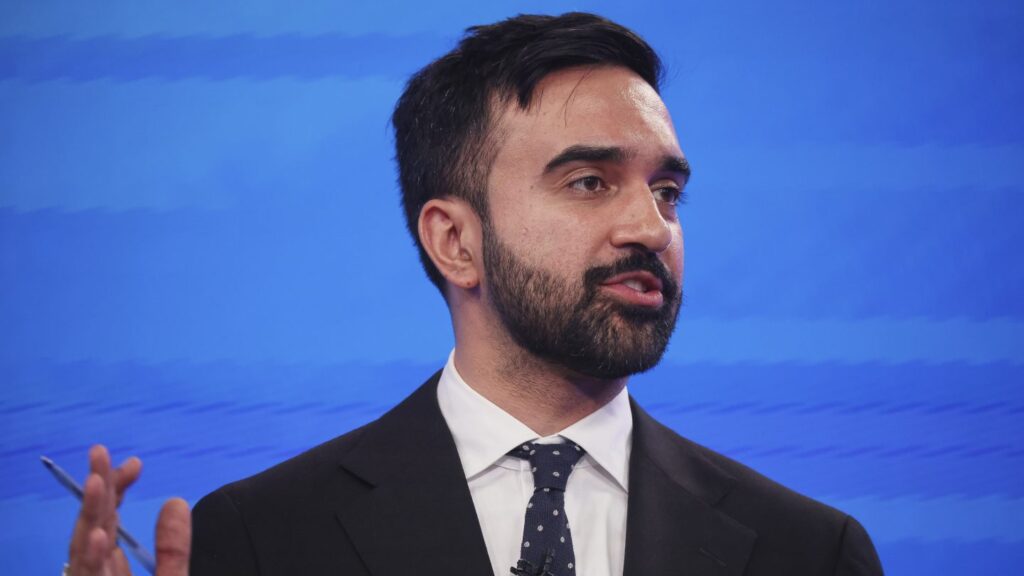
In a surprising turn of events, Zohran Mamdani is leading the New York City Democratic mayoral primary, marking a significant shift in the political landscape. The young state legislator managed to outpace seasoned politician Andrew Cuomo, who conceded soon after the polls closed. Mamdani’s unexpected lead raises questions about the evolving priorities of New York Democrats and the city’s future leadership. The primary remains undecided due to the ranked choice voting system, but Mamdani’s current position indicates a potential victory in a history-making race.
The Rise of Zohran Mamdani
Zohran Mamdani, a 33-year-old democratic socialist and member of the New York State Assembly, has captured significant attention in the New York City Democratic mayoral primary. With support from prominent progressives like Rep. Alexandria Ocasio-Cortez and Sen. Bernie Sanders, Mamdani’s campaign focused on addressing the city’s high cost of living and advocating for robust social reforms. His proposals include free buses, child care, and affordable housing funded by taxing the wealthy. This platform has energized many voters, especially among younger demographics who see him as a transformative figure.
Andrew Cuomo’s Concession
Former Governor Andrew Cuomo, aiming to make a political comeback after resigning amidst a sexual harassment scandal, conceded the race shortly after polls closed. Despite his experience and formidable political network, Cuomo could not secure the lead over Mamdani. “Tonight is his night. He deserved it. He won,” Cuomo told his supporters, acknowledging Mamdani’s victory. Although Cuomo dominated the initial stages of the campaign, his path to regaining political favor was significantly hindered by lingering controversies.
Impact of Ranked Choice Voting
The definitive outcome of the primary hinges on the ranked choice voting system, as neither candidate has a clear majority. With about 90% of the ballots counted, Mamdani maintains a strong lead and was also commonly ranked second on ballots where he wasn’t the first choice. This dual advantage further complicates Cuomo’s chances of a comeback, despite his previous dominance in New York politics. Ranked choice voting’s influence highlights a shift towards candidates with progressive platforms like Mamdani’s.
Future Prospects for New York City Leadership
The next step for the primary winner is the general election against incumbent Mayor Eric Adams, who, amid controversy, opted to run as an independent. Additionally, the Republican candidate, Curtis Sliwa, will be on the ballot, with a possibility of Cuomo running as an independent. The primary has unveiled an ideological split within the Democratic Party, represented by Mamdani’s progressive stance and Cuomo’s traditional moderate views. This divide could redefine New York City’s approach to challenges during the remainder of President Trump’s second term, particularly in handling economic and social justice issues.
Mamdani’s campaign continues to thrive on grassroots support, evidenced by the vibrant energy among his canvassers and supporters across New York City. As the ranked choice count progresses, Mamdani’s journey toward potentially becoming the city’s first Muslim and Indian American mayor encapsulates a broader shift towards progressive leadership.