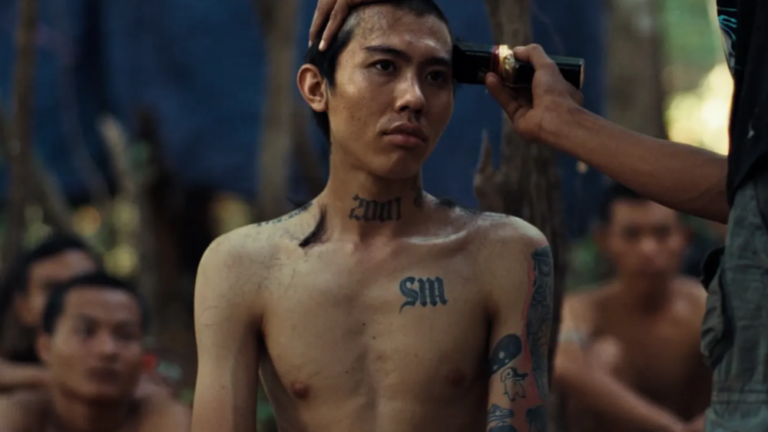
In “Brand New Landscape,” director Yuiga Danzuka crafts a subtly impactful Japanese drama that delves into the complexities of family life through the lens of an emotionally distant architect. This debut feature weaves together the disarray of family dynamics with the ever-shifting urban landscape of Tokyo, creating a narrative that is quietly affecting and intellectually ambitious. The title itself becomes a metaphor for the fractured relationships portrayed, set against a backdrop of a rapidly changing world.
The Fractured Family Portrait
“Brand New Landscape” opens with a family scene that serves as a thematic bookend to the story. At a sterile mall food court, architect Hajimi (Kenichi Endo) shares an uneasy meal with his wife Yumiko (Haruka Igawa) and their children, Ren and Emi. Their journey to a seaside holiday home reveals a marriage on the brink, with whispered exchanges and cold silences hinting at an imminent collapse. The architect’s preoccupation with work further isolates him from the emotional needs of those around him.
Progress and Distance
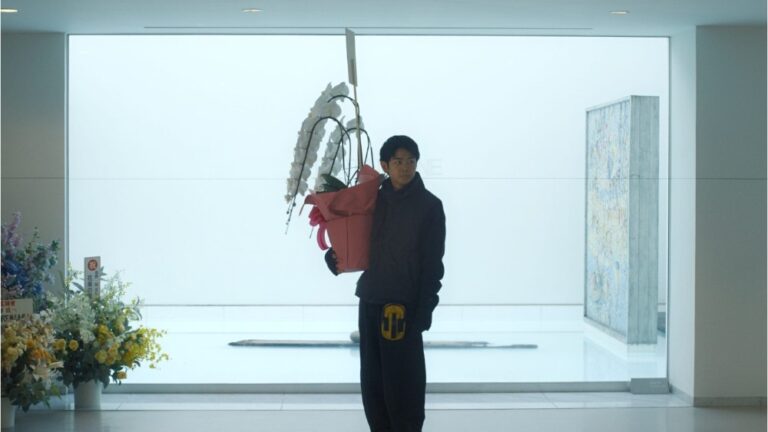
A decade later, the landscape has changed, yet the undercurrent of alienation persists. Ren, now a florist’s delivery driver, and Emi, preparing for marriage, are portrayed as products of their shared grief and trauma. Their mother’s passing and Hajimi’s subsequent departure to Singapore leave unresolved emotions simmering beneath the surface. The siblings’ interactions are tinged with an unspoken bond, rooted in their mutual experiences.
Loneliness and Self-Isolation
Danzuka’s script skillfully portrays the isolation each character cultivates. Emi appears socially adept, yet harbors doubts about forming lasting relationships. Ren, delivered with uncertainty by actor Kodai Kurosaki, mirrors his father’s emotional detachment, distancing himself to guard against vulnerability. Hajimi, engrossed in a controversial Shibuya redevelopment project, remains oblivious to the social displacement it causes, reflecting his broader neglect of personal connections.
Cinematic Subtlety
The film’s aesthetic mirrors its thematic undertones. Koichi Furuya’s camera work, deliberately avoiding closeups, captures the vastness of urban spaces, symbolizing emotional gaps. Kanshi Iwasaki’s sound design punctuates the silence with sparse arrangements, creating an atmosphere that lingers. A surprising touch of magical realism emerges later in the film, aligning with the narrative’s meditation on progress and the inevitability of change, even for those who resist it.
“Brand New Landscape” presents a poignant exploration of family and solitude, with Danzuka’s direction offering a measured view of personal and societal evolution. As the characters navigate their broken connections, the film encapsulates a universal truth: life moves forward, regardless of attempts to halt its progression.