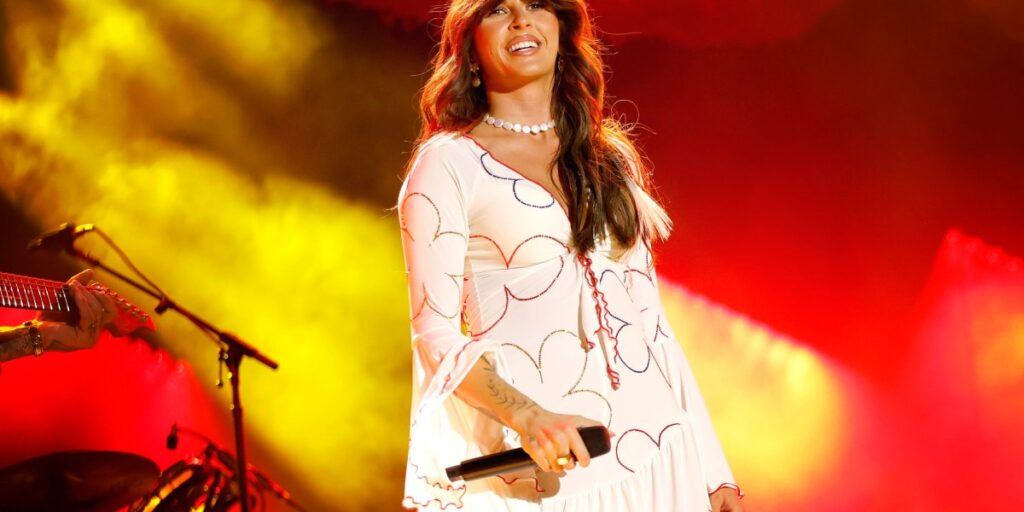
The astonishing rise of Ella Langley’s song “Choosin’ Texas” to the top of the Billboard Hot 100 has prompted widespread curiosity: how did a country song by an artist largely unknown to the public shatter records in an era of personalized music consumption? With 24 weeks reigning at No. 1, Langley’s accomplishment eclipsed the previous record of 22 weeks held by Mariah Carey’s holiday classic “All I Want for Christmas Is You.” This unprecedented achievement raises questions about the nature of music popularity and cultural consensus today.
Breaking the Record
As of October 10, Langley’s “Choosin’ Texas” ended its remarkable run on the charts, surpassed by Taylor Swift’s newly debuted track “Patient Zero,” which took the No. 1 spot on the same day. While Carey’s song returns to the top each December as a holiday standard, it now faces the challenge of reclaiming its record by hitting the top for three more weeks.
Public Recognition and Cultural Fragmentation
Despite her chart-topping success, public familiarity with Ella Langley remains surprisingly low. According to data from Luminate, only 24% of U.S. music listeners recognized her name in the second quarter of 2026. This figure shows gradual growth from 13% in late 2025 and 17% at the start of 2026, indicating that even a No. 1 hit can leave a significant portion of the audience asking, “Who?” This phenomenon invites a deeper conversation about the decline of cultural monoculture—once characterized by universally shared references across various media.
The Evolution of Monoculture
Monoculture refers to a collective understanding of popular music, television shows, and movies that everyone was at least aware of, even if they weren’t fans. This collective phenomenon thrived in earlier media landscapes dominated by a few television networks, radio stations, and the early days of MTV, where industry gatekeepers controlled what reached large audiences. You didn’t need to be a fan to share in the excitement of cultural conversations.
This shared landscape began to fragment before social media platforms like TikTok emerged, but the rise of personalized feeds is taking this division to new heights. What each person sees and hears online is increasingly tailored by algorithms that predict individual preferences rather than reflecting a broader cultural consensus.
The Role of TikTok in Music Discovery
TikTok epitomizes this personalization. Its For You feed is designed to be uniquely tailored based on user behavior, analyzing what content is liked, shared, viewed to completion, as well as timestamps, hashtags, and captions. With this sophisticated level of customization, users can find themselves in entirely different cultural bubbles. For instance, if you view one video from Olivia Rodrigo, the algorithm will likely flood your feed with similar content, while your neighbor may never see those videos at all.
The Feedback Loop and Cultural Bubbles
This self-reinforcing algorithmic structure has been studied, revealing that users exposed to a narrow set of interests tend to see less diversity in content, further isolating cultural experiences. This personalization highlights a disparity: while one group may celebrate a viral trend, another might remain entirely unaware, leading to the sense of a fragmented cultural landscape.
Implications of Algorithm-Driven Experiences
The implications extend beyond individual experiences. Platforms like Meta are also employing external user data to refine content delivery, creating a highly personalized online experience based on purchasing habits and other external interactions. Users can take control of what they see through features designed to manage topics, but these tools reinforce the separation of personal preferences from shared cultural moments.
Reflections on Shared Experiences
While the customization of feeds offers convenience and caters to distinct tastes, critics argue that it diminishes the joy of shared cultural experiences. Writer Kyle Chayka discusses how this atomization may strip away the common threads that connect people through art and entertainment, making it harder for individuals to rally around a singular phenomenon. Nonetheless, the trade-off between personal relevance and shared culture is a delicate balance that users must navigate: do we want to be exposed to content we don’t enjoy merely for the sake of cultural connection, or do we prefer the tailored experiences that modern algorithms provide?
The record-setting success of Ella Langley may signal a turning point in how we perceive cultural landmarks. As musical tastes become more fragmented, the question remains whether these moments will resonate widely or merely with those algorithmically curated to appreciate them.